Why Your AC Coil Freezes Up: Causes and How To Fix It
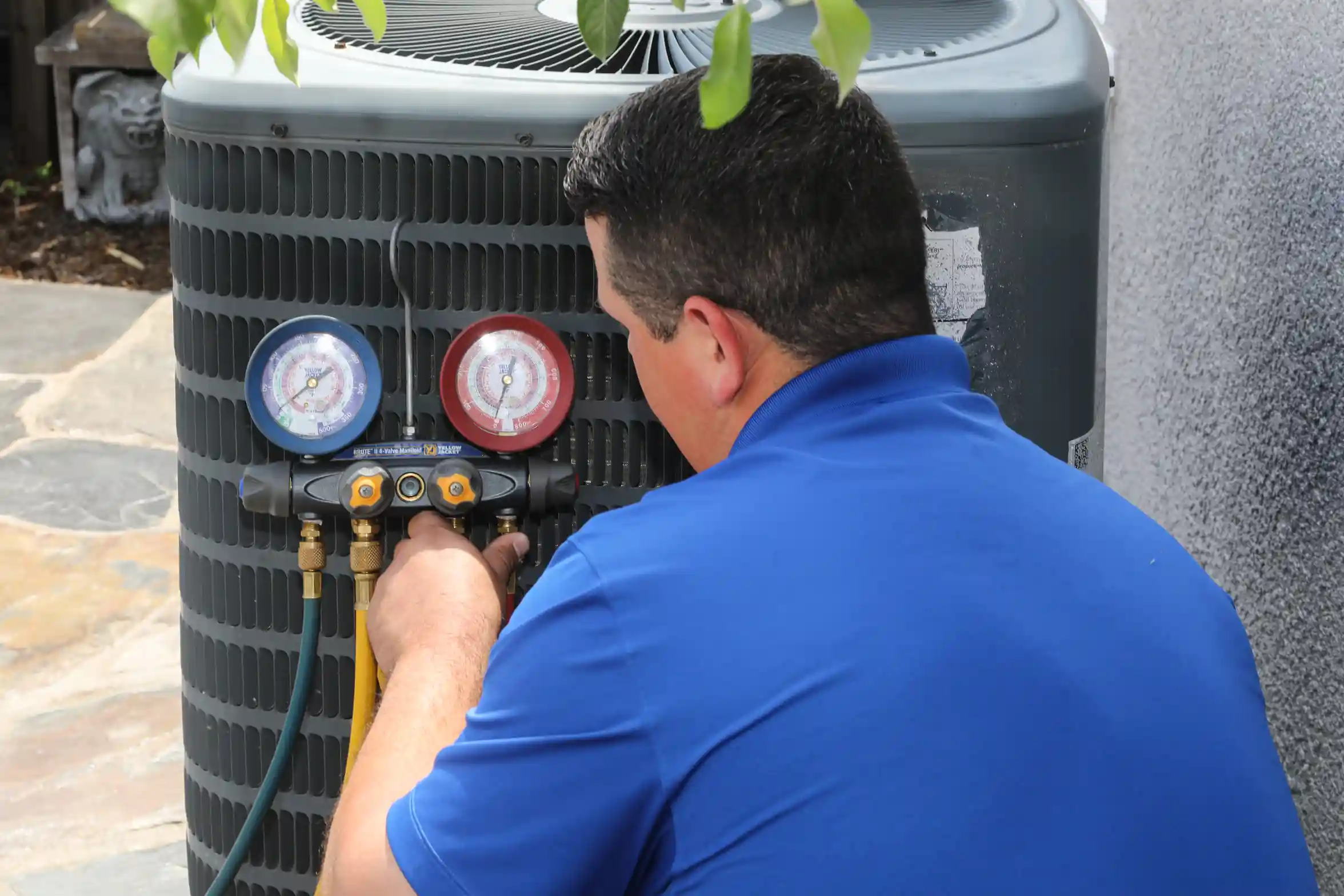
When the first heat wave arrives, you don’t want to end up sweating it out because of a frozen evaporator coil. If the coil gets too cold, moisture can start freezing. This results in wasted energy, potential damage to your compressor, and decreased comfort.
As a homeowner, there are a few troubleshooting tips you can attempt to resolve the issue. If they don’t work, then it’s important to schedule a maintenance appointment. To help you tackle this problem, we’ll cover the important steps you need to take, common causes, and the best prevention methods.
First Things First: What To Do If Your AC Coil Is Frozen Right Now
Before doing anything else, try the following troubleshooting checklist.
- Set your thermostat to “off” mode or raise the temperature so that your coils can thaw.
- Switch your fan to “on” to help with thawing.
- Allow the coils to thaw completely so that you can accurately diagnose the issue.
- Replace the air filter while you wait for the coils to thaw.
- Check to see if there are blocked return or supply vents.
- Use towels to soak up any water.
- If your coils refreeze before they’re able to thaw all the way, call a professional for help.
Important Safety Note: Never chip ice off of sharp objects. Do not continue running your AC while it is frozen.
What Causes an AC Coil To Freeze?
Your evaporator coil is responsible for absorbing heat. To do so, there must be warm airflow moving across the coils as well as the correct refrigerant pressure and charge. If any of these conditions are incorrect, the coil temperature can fall below freezing and ice will form.
The most common reason for frozen AC coils is airflow. If there isn’t enough warm airflow, the coils get too cold and start to freeze.
Top Causes of a Frozen Evaporator Coil
To get a better understanding of why this problem occurs, let’s dive into some of the most frequent causes and how you can spot them.
Dirty Air Filter
Signs: Weak airflow, dust on the evaporator coils, and a visibly clogged filter
This is the most common cause of frozen evaporator coils. A clogged filter can quickly restrict airflow. Once the coil becomes too cold, it starts to freeze. To fix this issue, try replacing the filter on time and with an appropriately sized filter.
Blocked Return Vents or Closed Supply Vents
Signs: Whistling noises, hot or cold rooms, and poor airflow
A blocked return vent or closed supply vent can starve your system of airflow. To troubleshoot, make sure rugs and furniture are away from vents. Additionally, you should make sure your vents are open.
Blower Fan Problems
Signs: Little to no air from the vents and unusual sounds
Sometimes, you may develop a dirty blower wheel, a faulty blower motor, or a malfunctioning capacitor. If any of these issues occur, the resulting lack of airflow will cause your coil to freeze.
This particular cause needs to be addressed by a professional. Our team will check the AC motor draw and how well your capacitor is functioning. Additionally, we will take airflow measurements to check your AC’s performance.
Dirty Evaporator Coil
Signs: Recurring frozen coils, even after the filter has been replaced
If your evaporator coil becomes dirty, the dirt can form an insulating layer around the coil and prevent proper airflow. In turn, this can lead to your coil freezing up repeatedly.
Dirty coils must be fixed by a professional. One of our experienced heating, ventilation, and air conditioning (HVAC) technicians can inspect the drain pan and clean the coil so that your system functions optimally again.
Low Refrigerant From a Leak
Signs: Recurring frozen coils, decline in cooling ability, hissing noises, and oily residue
If enough refrigerant escapes, it can lower the coil temperature too much. In turn, this can cause the coil to freeze.
It’s important to note that refrigerant doesn’t get used up. The only way for refrigerant levels to decline is if there is a leak. Because of this, it’s essential to call our HVAC technicians to schedule professional leak detection and repairs. Once the leak is fixed, we can recharge the refrigerant to the correct level.
Metering Device Issues (TXV or Fixed Orifice)
Signs: Inconsistent cooling and frequently frozen coils
If the refrigerant flow is incorrect, it can result in freezing, which must be dealt with by a professional. Our team can diagnose if you’re dealing with superheat or subcooling. Then, we can replace the metering device or adjust it as needed.
Ductwork Problems
Signs: Poor airflow in multiple rooms, uneven temperatures, and dusty, attic-like odors
Over time, duct leaks and collapsed ducts can occur, allowing air to escape. Similarly, poorly sized ducts can impact airflow. In both situations, the decline in airflow can result in frozen coils.
This issue requires a professional HVAC technician. One of our team members can perform a static pressure test and ductwork inspection. Then, we can seal and repair the ducts as needed.
Thermostat or Settings Issues
Signs: Incorrect setting
If your thermostat is set incorrectly, it can end up running too cold for too long. When combined with airflow problems, this can contribute to freezing issues. However, thermostats alone are rarely the cause of freezing. They are more likely to serve as a contributing factor.
To check for this problem, look at your settings. Make sure the temperature is not set too low. Additionally, verify that it is in “auto” or “cool” mode and not “fan” mode.
Outdoor Unit Issues That Contribute to the Problem
Signs: An outdoor unit clogged with debris and high run times
When your outdoor unit is at fault, it is often due to low outdoor airflow or a dirty condenser coil. These issues can impact the pressure level in your system and the overall performance.
You can try troubleshooting by removing plants and debris that are within 2 to 3 feet of the unit. If this is not enough, you may need to schedule a professional cleaning.
Ice on the AC Line Outside vs. Ice on the Indoor Coil: What It Means
When your suction line is sweating, this is normally due to condensation and moisture. It is not a cause for concern. However, suction line icing means that the line has dropped below freezing and is starting to ice over. If your line is iced, your indoor coil is likely iced up as well.
Keep in mind that ice on your suction line is merely a symptom of the problem and not the cause. You can troubleshoot the issue by checking for airflow problems and replacing the filter first. If these measures don’t work, you should schedule professional HVAC help.
How a Technician Diagnoses a Frozen Coil
Once our technician shows up at your home, they’ll work quickly to diagnose the underlying problem.
- Confirm that the coil has thawed before taking readings.
- Measure your airflow and static pressure.
- Inspect the filter and coil condition.
- Evaluate your blower performance.
- Make sure the refrigerant is charged correctly.
- Look for signs of a refrigerant leak.
- Inspect your ducts if low airflow is a chronic concern.
How To Prevent Your AC Coil From Freezing Again
To avoid this problem in the future, remember to perform the following preventative maintenance tips.
- Make sure your air filters are changed consistently. Depending on the manufacturer, this should likely be done every 30 to 90 days.
- Ensure your return vents are open and unblocked.
- Don’t close too many vents in your home.
- Fix duct leaks and restrictions.
- Clean your indoor coil and blower as part of your seasonal maintenance.
If you experienced frozen coils once, it is more likely that it will happen again. Because of this, it’s important to schedule a tune-up before peak heat arrives. To make routine tune-ups easier, you can sign up for our set-it-and-forget-it membership plan. Besides complimentary tune-ups, our plan also features discounts, special promotions, and priority scheduling.
FAQs
Can I run my AC if the coil is frozen?
There’s a big difference between what you can do and what is a good idea. If you continue to run an AC that has the coils frozen, it will eventually freeze up so much that it stops working entirely. Worse still, continuing to run your AC with frozen coils can damage your compressor and lead to thousands of dollars in damage.
How long does it take for a frozen AC coil to thaw?
It can take between 1 hour and 24 hours. In most cases, coils will thaw in less than 8 hours. However, this can vary based on your room temperature and how much ice has developed.
Does low refrigerant always mean a leak?
Yes. Refrigerant lines are a closed system. The only way for refrigerant levels to fall is if a leak has occurred.
Will a dirty filter cause ice on the coil?
Yes, because dirty filters limit airflow. Because less warm air is flowing over the coils, the coils become too cold and freeze over.
Why is my AC blowing warm air when the coil is frozen?
At this stage, the coils are no longer absorbing heat, so they can’t cool the air. Your blower motor still works, so it is essentially blowing warm air into each room.
Is ice on the outside AC pipe normal?
No, it isn’t. This indicates that your AC is freezing up, likely due to poor airflow or low refrigerant. Left untreated, this problem can severely damage your compressor.
How do I know if it’s airflow or refrigerant issues?
You can start by replacing your air filter and making sure your vents are open. If this does not work, you’ll need to have a technician test for airflow levels and refrigerant leaks.
Can a frozen coil damage my compressor?
Absolutely. Continuing to run your AC with a frozen coil places extra stress on your compressor and eventually results in it failing completely.
Prevent Frozen Coils This Summer
Before the first Sacramento heat wave rolls around, schedule an AC maintenance appointment. Frozen coils are a symptom of an underlying problem. Often, it means that your AC or heat pump is dealing with airflow or refrigerant issues. You can troubleshoot by thawing the AC, checking the filter, and verifying that there is adequate airflow.
If your AC continues to freeze up, it’s a sign you need a professional diagnosis. Reach out to Fox Family Heating & Air Conditioning for a springtime tune-up.
