How to Diagnose a Bad Furnace Gas Valve: 10 Things To Check in 2025
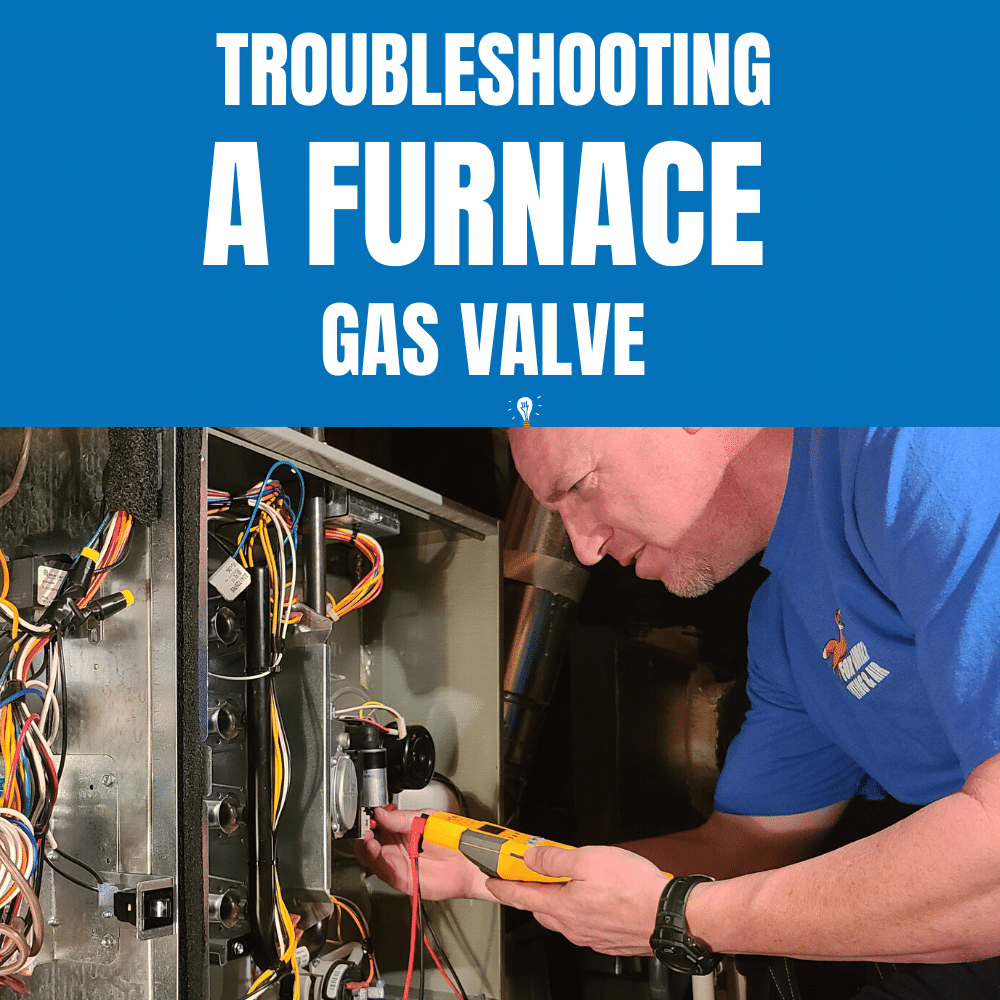
Is your furnace clicking on and off without ever really lighting, or shutting down partway through a heat cycle? A faulty gas valve is one possible cause, but it is almost never the first thing that actually fails. In many homes around Rancho Cordova and Sacramento, our technicians find that the valve is doing exactly what it was designed to do: stay closed when something else is not right.
On a cold Sacramento Valley night, a non-working furnace feels like an emergency. Before anyone replaces an expensive gas valve, it is important to understand what the valve does, why it is such a critical safety device, and what should be checked around it. This guide explains the most common issues our team at Fox Family Heating and Air Conditioning sees in the field, and the ten things that should be checked before condemning a furnace gas valve.
Important safety note: Gas valves and gas piping are not homeowner repair items. Many of the checks described here are for trained, licensed HVAC technicians using specialized tools. Homeowners can use this information to understand what the technician is doing, ask better questions, and decide when it is time to schedule professional service.
What a Furnace Gas Valve Does
The gas valve is the component that actually allows natural gas or propane to enter the burners inside a gas furnace. When it receives the proper 24-volt signal from the control board, an internal coil opens the valve and regulates how much gas flows through the manifold and on to the burner orifices.
Most residential natural gas furnaces in 2025 are designed for a standard outlet pressure of about 3.5 inches of water column. The gas coming from the utility typically arrives at the furnace with an inlet pressure between 7 and 10 inches of water column. The gas valve reduces the inlet pressure down to the correct outlet pressure so the burners fire safely and efficiently.
Inside the valve, a low-voltage coil acts like an electromagnet. When the 24-volt signal is present, the coil opens the internal passage. When the signal is removed or when any safety device opens, the valve snaps closed. Some modern furnaces use two-stage gas valves, which have separate settings for low fire and high fire. Both stages must be adjusted and verified by a technician when the furnace is commissioned or when a valve is replaced.
Because the gas valve has to contain gas under pressure and respond instantly to safety signals, it is built as a sealed, non-serviceable part. If internal components fail or the valve body is damaged, the entire valve must be replaced rather than repaired.
Gas Valve Safety Warning
Anytime there is a concern about natural gas, propane, or carbon monoxide, safety has to come first. A gas valve that does not open when it should can leave a home without heat, but a valve that opens when it should not can create a serious fire or carbon monoxide hazard.
Keep these safety principles in mind:
- If anyone in the home smells gas, hears a hissing sound from gas piping, or feels lightheaded or nauseous around the furnace, everyone should leave the home and contact the gas utility or fire department before calling for HVAC service.
- Gas valves cannot be repaired in the field. They are not designed to be taken apart, cleaned internally, or lubricated.
- Never hit, tap, or bang on a gas valve in an attempt to free it up. That kind of force can damage internal parts or cause a leak.
- Most tests that involve live gas pressures or energized 24 volt circuits should only be performed by a qualified HVAC technician.
- Improper work on gas valves and gas piping can void equipment warranties, violate building codes, and create issues with homeowners insurance if a fire or damage occurs.
For Sacramento area homeowners, the safest approach is to use these ten checks as a roadmap for a professional visit. A trained technician will move through these steps in a logical order to confirm whether the gas valve is really the problem, or whether another part of the system is keeping it from operating.
Where the Gas Valve Fits in the Furnace Sequence
Understanding the basic furnace sequence of operations makes gas valve troubleshooting much easier to follow. A typical modern gas furnace goes through this order every time the thermostat calls for heat:
- The thermostat sends a heat call to the furnace control board.
- The control board starts the inducer motor to establish draft through the heat exchanger and vent system.
- The pressure switch closes when it senses the correct negative pressure from the inducer.
- The hot surface igniter or spark igniter warms up and gets ready to light the gas.
- The control board sends 24 volts to the gas valve.
- The gas valve opens, allowing gas to flow through the burners.
- The flame sensor proves that the burners have ignited properly.
- After the heat exchanger warms up, the blower motor turns on and delivers warm air through the ducts.
If anything in this sequence does not happen correctly, the control board will remove power from the gas valve and close it. That is why a furnace that will not stay lit is not always caused by a bad valve. Often, a safety device or airflow issue is doing its job and telling the valve to shut off.
10 Things To Check Before Condemning a Furnace Gas Valve
The title of this article promises ten specific checks. Each item below represents a real world problem our technicians see on service calls around Rancho Cordova and Sacramento. Most of them need to be checked by a licensed professional, but understanding them will help homeowners see why a good technician rarely jumps straight to replacing the gas valve.
1. Check the Wires to the Gas Valve
Before anyone assumes the gas valve itself has failed, the low voltage wiring that feeds it needs to be inspected. The gas valve depends on a clean 24 volt signal from the furnace control board. Loose connections, damaged insulation, or corroded terminals can interrupt that signal and keep the valve from opening.
A technician will:
- Turn off power to the furnace and visually inspect the low voltage wires leading to the gas valve.
- Look for brittle insulation, melted sections near the burner compartment, or wiring that has rubbed against sharp metal edges.
- Gently tug on the push on connectors at the valve terminals to confirm they are tight.
- Restore power and, using a multimeter, measure the voltage at the valve during a heat call to confirm that a full 24 volts is present when the board is asking for heat.
If there is no 24 volt signal at the valve even though the furnace is trying to start, the problem is usually upstream in the control board, pressure switch, rollout switches, or limit circuit rather than inside the valve.
2. Check the Coil at the Gas Valve
When 24 volts is applied to the gas valve, the internal coil should energize and allow gas to pass through. If that coil is open or shorted, the valve will not open even when voltage is present.
With gas turned off and power disconnected, a technician can:
- Remove the low voltage wires from the gas valve.
- Use an ohmmeter to measure resistance across the valve terminals.
- Compare the reading to the manufacturer specifications printed on the valve or in the service manual.
A healthy valve coil will show a measurable resistance within the expected range. If the meter reads OL, or infinite resistance, the coil is open and the valve will never energize. A reading of zero ohms indicates a shorted coil. In either case, the valve must be replaced as a complete assembly. It is not safe or possible to rebuild the internal coil in the field.
3. Check Inlet Gas Pressure
Even a brand new gas valve cannot work properly if the gas supply feeding it is not within the correct range. Low inlet pressure can cause delayed ignition, small weak flames, or burners that go out when other gas appliances in the home turn on. Excessively high inlet pressure can cause noisy, roaring flames and unsafe operation.
For a natural gas furnace, the rating plate typically calls for an inlet pressure between 7 and 10 inches of water column. Propane systems are usually designed for higher inlet pressure, often around 11 inches of water column. The exact numbers are listed on the furnace data tag and in the installation manual.
A technician checks inlet pressure by connecting a manometer to the inlet test port on the gas valve, then running the furnace while other gas appliances in the home are operating. If inlet pressure drops out of the acceptable range during operation, the issue may be with the gas meter, regulator, or supply piping rather than the valve itself.
Because this test involves opening gas test ports and working around live gas, it should only be done by a qualified professional.
4. Check for Plugged Burner Orifices
The gas valve can be working perfectly and still not deliver enough gas to the burners if the burner orifices are partially blocked. Dust, rust flakes, or insect activity inside the burner assembly can clog the small openings where gas enters the burners.
Symptoms of plugged burner orifices include:
- Uneven flames across the burner rack.
- Burners that light on one end but do not carry flame smoothly to the other end.
- A furnace that lights, then quickly shuts back off because the flame sensor does not see a consistent flame.
After shutting off power and gas, a technician can remove the burner assembly, inspect the orifices, and clean or replace them as needed. This is detailed work in a confined space, and it is important that the burners be reinstalled and aligned exactly as designed so that the flame enters the heat exchanger safely.
5. Check for Voltage or Pressure Dropout
Some gas valve problems only show up once the furnace has been running for a few minutes. The burners may light, then shut off, then light again. This kind of intermittent operation often points to a voltage or gas pressure dropout rather than a bad valve body.
To diagnose this, a technician may:
- Monitor the 24 volt signal at the gas valve while the furnace fires, watching for any sudden loss of voltage that would cause the valve to close.
- Verify that the control board is maintaining a steady 24 volts under load.
- Measure outlet gas pressure at the valve while the furnace is running to confirm it holds close to the 3.5 inch water column setting for natural gas.
- Check inlet gas pressure at the same time to see whether the supply line is dropping when other appliances operate.
If voltage or gas pressure is dropping out, the cause may be a weak transformer, loose connection, undersized gas piping, or issues with the gas meter or regulator. Those problems need to be corrected before replacing the gas valve.
6. Check the Flame Sensor
The flame sensor is a small metal rod that sits in the path of the burner flame. Its job is to prove to the control board that flame is present whenever the gas valve is open. If the sensor does not send a proper signal, the board will shut off the gas valve within a few seconds to prevent raw gas from entering the heat exchanger.
Over time, the flame sensor can become coated with oxidation or debris. When that happens, the microamp signal returning to the control board drops below the required threshold. The furnace may light briefly, then shut down, even though the gas valve and burners are functioning correctly.
During a tune up or service call, a technician will:
- Inspect the flame sensor for rust or buildup.
- Clean it gently with a fine abrasive pad if needed.
- Check the wiring connection back to the control board.
- Measure the microamp signal while the furnace is firing to confirm it is within the manufacturer specification.
Restoring a clean, solid flame signal often resolves nuisance shutdowns without touching the gas valve.
7. Check the Rollout Switch and Burner Alignment
The rollout switch is a safety device that monitors the area at the front of the burners. If flame ever rolls out of the burner openings instead of traveling straight into the heat exchanger, the rollout switch will open and tell the control board to shut off the gas valve. Flame rollout can be caused by misaligned burners, rust or debris at the ends of the burner tubes, or a blocked heat exchanger. In some cases, a portion of the flame can drift sideways and trip the rollout switch even though the gas valve is working correctly.
A technician will:
- Inspect the burner assembly for rust buildup at the crossover channels.
- Clean the burner ends and crossover areas with a wire brush.
- Make sure each burner is seated correctly in its track so the flame enters the heat exchanger opening without touching surrounding metal.
- Test the rollout switch for proper operation, and replace it if it has failed.
Rollout switches must never be bypassed or removed. If the switch is tripping repeatedly, it is a sign that combustion is not happening safely, and the underlying cause needs to be corrected.
8. Check for a Dirty Evaporator Coil or High Limit Trips
The high limit switch is another safety device that shuts off the gas valve if the furnace cabinet becomes too hot. One of the most common reasons for high limit trips is poor airflow across the heat exchanger. When warm air cannot move into the duct system, heat builds up inside the furnace and the high limit responds by opening the circuit to the gas valve.
In many Sacramento homes, a dirty evaporator coil sitting above the furnace is the hidden cause. Dust and debris can clog the coil fins, especially after years of heavy summer air conditioning use. When winter arrives and the first cold snap hits in late November, that restriction suddenly shows up as a furnace that runs for a short time then shuts off on high limit.
A professional inspection will include:
- Checking the air filter and replacing it if it is dirty or restrictive.
- Inspecting the evaporator coil for dirt and buildup.
- Measuring temperature rise across the furnace to confirm it is within the range listed on the data plate.
Cleaning or replacing a dirty evaporator coil often restores proper airflow so the high limit stops cutting power to the gas valve.
9. Check Blower Motor Speed Settings
Even with a clean coil and filter, the furnace can still overheat if the blower motor is not moving enough air. If the motor speed is set too low for heating, the heat exchanger will run hotter than it should, and the high limit switch may open and shut off the gas valve.
On many furnaces, different blower speeds are used for cooling and heating. The installer chooses which motor taps or control board settings to use based on duct design, static pressure, and equipment size. If those settings are not correct for the home, or if they were never adjusted from factory defaults, the furnace may overheat in heating mode.
A technician will reference the installation manual, check static pressure, and adjust blower speed taps or programming as needed. In some cases, a weak blower motor or failing capacitor can also reduce airflow and cause high limit trips. Those issues need to be resolved so the gas valve can run without constant interruptions.
10. Check Ductwork for Restrictions
The last major area to evaluate before condemning a gas valve is the duct system itself. The furnace can only move as much heat as the ducts allow. Crushed flex ducts, closed registers, undersized returns, or blocked return grills all contribute to low airflow and high furnace temperatures.
Homeowners can often spot some of these issues visually:
- Look for flex ducts in the attic or crawlspace that are kinked, flattened, or sharply bent.
- Make sure return air grills are not blocked by furniture, rugs, or decorations.
- Confirm that supply registers are open in the rooms where heat is needed.
A professional will go further by measuring static pressure, checking duct sizes against equipment capacity, and looking for disconnected or leaking sections. Correcting duct restrictions protects the furnace, reduces energy use, and allows the gas valve to operate under the conditions it was designed for.
When Gas Valve Replacement Is Needed
After moving through these ten checks, there are still times when the gas valve itself is the confirmed problem. Replacement may be necessary when:
- The valve coil is open or shorted and will not energize even with proper voltage.
- The valve sticks closed or open when tested, even though wiring and gas supply are correct.
- Gas leaks are detected at the valve body or stem.
- The valve cannot maintain a stable outlet pressure at the rated 3.5 inches of water column, even with proper inlet pressure.
When a gas valve is condemned, the replacement needs to be done carefully:
- The new valve must match the original in capacity, voltage, and configuration, including any two stage operation.
- For propane systems, the correct conversion spring and manifold orifices must be installed, and the valve labeled clearly for LP use.
- Piping connections should be made with proper pipe dope or approved tape, using two wrenches to avoid stressing the manifold.
- After installation, a technician must check for leaks with an electronic gas detector or soap solution on both the inlet and outlet sides of the valve while it is operating.
- Final inlet and outlet gas pressures must be measured and adjusted to match the furnace rating plate, including both low and high fire settings on two stage equipment.
Because this work directly affects combustion and venting, it should always be handled by a licensed professional who understands local codes and manufacturer requirements.
Why Professional Service Matters
In the Sacramento Valley, winters are relatively mild compared to other parts of the country, but cold, damp nights in December and January still put a lot of demand on gas furnaces. When a furnace fails during the first real cold snap, the priority is often to get the heat back on as quickly as possible. That urgency can lead to rushed decisions and unnecessary part replacements.
Partnering with an experienced company like Fox Family Heating and Air Conditioning helps avoid those problems. Our technicians see hundreds of heating calls every season across Rancho Cordova, Sacramento, and the surrounding communities. That experience helps them spot patterns, verify each part of the sequence of operation, and confirm that the gas valve really is the issue before replacing it.
Professional service also provides:
- Proper test equipment for measuring gas pressures, voltage, and combustion performance.
- Documentation that the work was completed according to code and manufacturer instructions.
- Protection of equipment warranties and homeowner safety.
- Advice on maintenance, filters, and airflow improvements that prevent repeat issues.
Most importantly, a trained technician will never bypass safety devices or take shortcuts with gas piping. That peace of mind matters just as much as getting the heat back on.
Keeping Your Furnace Safe and Reliable in 2025
Heading into the 2025 heating season, many furnaces in the Sacramento area are ten to fifteen years old or more. Age alone does not mean a gas valve is bad, but it does make regular maintenance even more important. Annual precision tune ups give technicians a chance to clean the burners and flame sensor, verify gas pressures, check electrical connections, and confirm that safety controls are operating correctly.
If your furnace is not lighting consistently, shuts down after a few seconds, or seems to struggle whenever other gas appliances turn on, it is time to schedule a professional inspection. The gas valve may be part of the story, but as these ten checks show, there are many other components that can cause similar symptoms.
Fox Family Heating and Air Conditioning serves Rancho Cordova, Sacramento, and Northern California with friendly, knowledgeable furnace service. To schedule a visit, call 916-877-1577 or request an appointment online.
With the right diagnostics and a careful approach to gas safety, you can keep your furnace running reliably through every cold snap the Sacramento Valley throws your way.