Higher SEER2 Rating: How Much Will I Really Save?
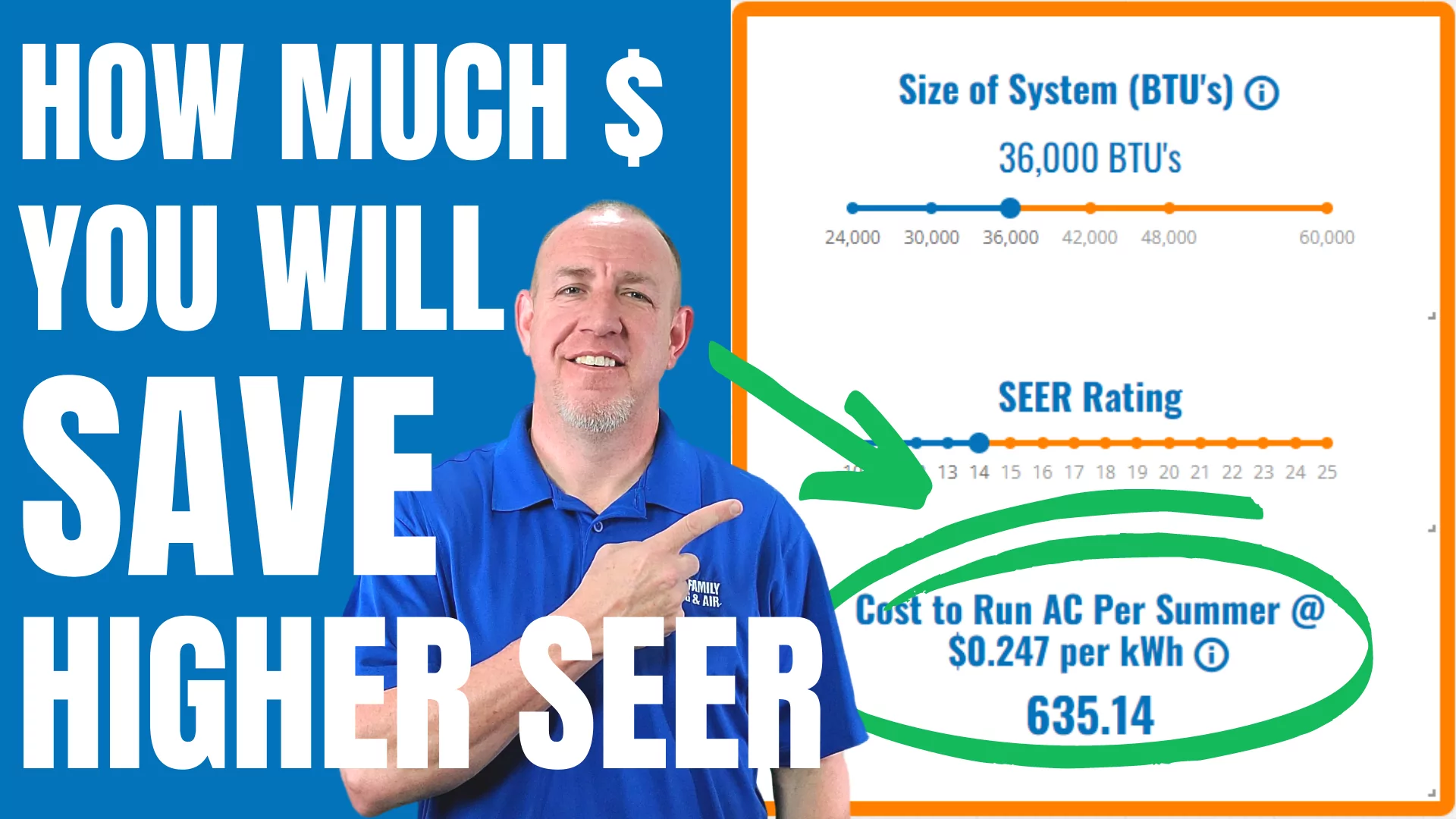
When homeowners in the Sacramento area start gathering quotes for a new air conditioner or heat pump, one thing becomes obvious very quickly. The price goes up as the efficiency rating goes up. That naturally leads to the big question many people ask our team at Fox Family Heating and Air Conditioning:
Is a higher SEER2 rating really worth the extra money, and how much can you realistically expect to save on your electric bill each summer?
Our technicians install and service systems across Rancho Cordova, Sacramento, and the surrounding communities every day. Below, we walk through how SEER2 works, what kind of savings are typical in our climate, and how to think about the payback period when you compare different efficiency options.
Understanding SEER2 Efficiency Ratings
SEER stands for Seasonal Energy Efficiency Ratio. For many years, equipment was labeled with a SEER rating that told you how much cooling you received for each watt of electricity the system used over a test season.
As of 2023, the U.S. Department of Energy has shifted to a new testing standard called SEER2 for central air conditioners and heat pumps. The new test uses higher external static pressure and more realistic operating conditions, so the numbers are a little lower than the old SEER ratings for the same piece of equipment.
Here are a few key points based on current federal standards:
- Most older systems we replace in Sacramento were originally labeled around 10 to 14 SEER.
- Under the current federal minimum efficiency standards in 10 CFR 430.32, new split system central air conditioners installed in California (the Southwest region) must meet at least 14.3 SEER2.
- High efficiency systems can reach into the upper teens or around 20 SEER2, especially variable speed heat pumps.
You can think of SEER2 the same way you think of miles per gallon on a car. The higher the SEER2 rating, the less electricity you need to get the same amount of cooling.
If you are used to seeing SEER on older equipment, remember that SEER2 numbers are usually several percent lower for the same model. That does not mean the equipment suddenly became less efficient. It just reflects a tougher, more realistic testing method.
Calculating Your SEER2 Savings
The basic math behind efficiency is straightforward. For cooling, a simple rule of thumb is:
Annual cooling cost ≈ (BTU capacity ÷ (efficiency rating × 1000)) × cooling hours × electricity rate
Where:
- BTU capacity is the size of your system in BTU per hour.
- The efficiency rating is SEER2 for modern systems.
- Cooling hours is how many hours per year your system runs.
- The electricity rate is what you pay per kilowatt hour.
Most single-family homes we see in the Sacramento area have systems in the 2.5 to 5 ton range. For this example, we will use a 3 ton system, which is 36,000 BTU per hour.
We also need a reasonable estimate for electricity costs. Since the original version of this content was created in 2022, both SMUD and PG&E have updated their rates several times. By 2025, many Sacramento area homeowners see summer electricity rates that often land somewhere in the mid-20-cent to mid-30-cent per kilowatt hour range, depending on the utility and time of day.
To keep the math simple, we will use 30 cents per kilowatt hour as an example. You can substitute the rate from your own bill for a more precise number.
Example: 3 Ton System, 1,200 Cooling Hours, 30 Cent Electricity
In our climate, it is common for an air conditioner to run 800 to 1,400 hours per year, depending on thermostat settings, insulation, and how much you use the system. For easy math, we will use 1,200 hours.
Using the formula above:
- 10 SEER (older label) system: about 3.6 kW while running
- 3 SEER2 system: about 2.5 kW while running
- 16 SEER2 system: about 2.3 kW while running
- 18 SEER2 system: about 2.0 kW while running
- 20 SEER2 system: about 1.8 kW while running
That leads to this approximate comparison:
| System Type | Efficiency Rating | Approx Annual Energy Use | Approx Annual Cooling Cost* |
|---|---|---|---|
| Older system | 10 SEER | 4,300 kWh | 1,300 dollars |
| New standard efficiency | 14.3 SEER2 | 3,000 kWh | 910 dollars |
| Higher efficiency | 16 SEER2 | 2,700 kWh | 810 dollars |
| Premium efficiency | 18 SEER2 | 2,400 kWh | 720 dollars |
| Ultra high efficiency | 20 SEER2 | 2,200 kWh | 650 dollars |
*Example based on a 3-ton system, about 1,200 hours of cooling per year, and a 0.30 dollar per kWh summer rate. Your actual numbers will vary with system size, usage, and the rate plan on your utility bill.
Even with conservative assumptions, you can see the trend:
- Just moving from an older 10 SEER system to a basic 14.3 SEER2 system can trim roughly 300 to 400 dollars per year in this scenario.
- Stepping up from 14.3 SEER2 to 16 SEER2 might save around 100 dollars per year.
- Stepping up from 14.3 SEER2 to 18 SEER2 can approach 200 dollars per year in savings.
Those ranges grow if you use the system heavily or if your electricity rate is higher than 30 cents per kilowatt hour during peak hours.
Real World Factors That Change Your Savings
The table above gives a helpful starting point, but real homes are more complicated. When our technicians run the numbers in the field, a few factors always come into the conversation.
- Climate and number of hot days
Here in the Sacramento Valley, summer is long and dry, with many days in the upper 90s and low 100s. The more hours your system runs to keep up with that heat, the more you benefit from a higher SEER2 rating.
- Thermostat settings and usage habits
If you like the house at 72 degrees all summer, or you work from home and run the system all day, your annual hours will be higher than a family that sets the thermostat at 78 and spends most days out of the house. Higher usage makes efficiency upgrades more valuable.
- Ductwork and airflow
An ultra-efficient outdoor unit cannot deliver its full potential if the duct system is undersized, leaky, or restricted. In many homes around Rancho Cordova and Sacramento, improving ductwork and airflow can sometimes save almost as much energy as jumping up an efficiency tier.
- Insulation, windows, and shade
Poor attic insulation, single-pane windows, and a lack of shade on west-facing glass all make the home harder to cool. If the building loses a lot of conditioned air, your system will run longer, which increases both your bills and the potential savings from a higher SEER2 unit.
- Your actual utility rate
SMUD and PG&E both use time-of-use rate structures with higher prices during late afternoon and early evening. If your system does most of its work during those peak periods, every kilowatt you avoid with a more efficient unit is worth more.
Because of all these variables, the best way to get a precise savings estimate is to have a comfort advisor look at your home, your current equipment, and your past utility bills. They can then use realistic run-time assumptions instead of generic national averages.
Sacramento Specific Considerations
Sacramento is not a mild coastal climate. Typical summer design temperatures are in the low 100s, and we see a string of triple-digit days nearly every year. Even when evening Delta breezes cool things down a bit, the afternoon load on your air conditioner can be intense.
Most of the homes we work on in Rancho Cordova, Elk Grove, Folsom, and surrounding neighborhoods rely heavily on their air conditioners from late May through early October. On the hottest days, systems may run ten or more hours to keep the house comfortable.
That heavy usage is one of the reasons Sacramento area homeowners often see strong value in at least a moderate upgrade in SEER2. When the system runs many hours per year, even a modest reduction in energy use per hour adds up across an entire season.
At the same time, local electricity rates are higher than they were a few years ago, especially during peak periods. Every kilowatt hour you can avoid by running a more efficient system saves more money in 2025 than it did back when many of the older 10 SEER systems were installed.
Finally, many homes in our area have aging ductwork in attics that reach well over 120 degrees in the afternoon. When Fox Family evaluates replacement options, we do not just talk about equipment efficiency. We also look at duct sealing, insulation, and airflow improvements that work together with a higher SEER2 system to deliver the savings you expect.
How To Think About Payback Period
Once you have a sense of your potential savings, the next question is how long it will take for those savings to pay back the added upfront cost of a higher efficiency system.
The basic idea is:
Payback period = Extra upfront cost ÷ Annual energy savings
Here is a simple example using the 3-ton, 1,200-hour scenario above.
- A standard efficiency option is a 14.3 SEER2 system.
- A higher efficiency option is an 18 SEER2 system.
- The estimated annual savings between those two options is about 190 dollars in our example.
If the higher efficiency package costs 3,000 dollars more than the standard efficiency package, the simple payback looks like this:
- 3,000 dollars ÷ 190 dollars per year ≈ 16 years
If the efficiency upgrade only costs 1,500 dollars more, the payback drops to around 8 years.
That payback calculation is one important piece of the decision, but it is not the only one. Many homeowners also care about:
- Comfort improvements from variable speed or multi-stage equipment.
- Quieter operation indoors and outdoors.
- Longer equipment life when systems can run at lower speeds instead of full blast.
When our comfort advisors sit down at your kitchen table, the goal is to help you see both the financial side and the comfort side clearly so you can decide what feels right for your home and budget.
Our Recommendation For Most Homeowners
Because every home and family is a little different, there is no single SEER2 rating that is perfect for everyone. That said, here is how we usually frame the options for Sacramento area homeowners.
- If you are replacing a very old 8 to 10 SEER system and plan to move in the next few years, a quality 14.3 SEER2 system often gives a big step up in comfort and reliability without a high upfront cost.
- If you expect to stay in your home at least 10 years and you run the air conditioner a lot each summer, stepping up to a 16 or 18 SEER2 system frequently offers a nice balance of energy savings, comfort features, and payback period.
- If you value maximum comfort, the quietest operation, and the lowest possible energy use, premium variable speed systems in the high SEER2 range can make sense, especially for larger homes or households that are home all day.
During an in-home visit, our technicians can measure your existing ductwork, look at the insulation, and review your utility usage. From there, we can model a few options side by side so you can see your estimated annual energy costs and the long term impact of each SEER2 level.
Conclusion And Next Steps
Higher SEER2 air conditioners and heat pumps almost always cost more upfront, but in a hot, dry climate like Sacramento, the energy savings over the life of the system can be significant. When you combine those savings with improved comfort and quieter operation, many homeowners find that at least a moderate efficiency upgrade is worth considering.
If you are thinking about replacing your air conditioner or heat pump, Fox Family Heating and Air Conditioning can help you compare SEER2 options, understand potential savings based on your actual usage and utility rate, and choose a system that fits both your comfort needs and your budget.
Ready to schedule service or request a replacement quote? Call us at 916-877-1577 or book online. To see the communities we serve across Rancho Cordova, Sacramento, and Northern California, visit our service area page.
Fox Family Heating and Air Conditioning serves Rancho Cordova, Sacramento, and Northern California. Our team is here to help you stay comfortable and make confident decisions about your home’s heating and cooling systems.
