Don’t Stop Believing In Your HVAC System
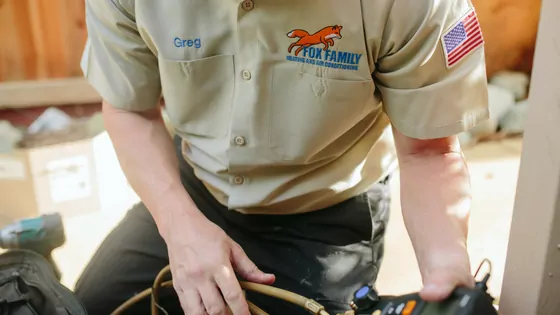
When your air conditioner struggles during a 104-degree Sacramento Valley afternoon or your furnace quits on the first cold snap of November, it is easy to feel like your HVAC system is letting you down. Many homeowners start to assume the equipment is finished and that a full replacement is the only option. In reality, that is often not the case.
At Fox Family Heating and Air Conditioning, our technicians spend every season bringing tired systems back to life for homeowners across Rancho Cordova, Sacramento, and the rest of Northern California. With the right diagnostics, repairs, and maintenance, a good system usually has more comfort left to give. The key is knowing when to keep believing in your current equipment and when it makes sense to start planning for something new.
This article explains how to think about the age of your system, what warning signs deserve attention, how modern 2025 HVAC technology has changed, and how our team approaches honest recommendations so you can feel confident about your next step.
When It Makes Sense To Keep Believing In Your System
Every system has a realistic lifespan, but that range is wider than many homeowners realize. In the Sacramento Valley, a well-maintained central air conditioner or heat pump often lasts 12 to 15 years, and gas furnaces regularly reach 15 to 20 years. The actual number depends on installation quality, ductwork, and how consistently the system has been serviced.
If your air conditioner or furnace is under 10 years old and has not had many major repairs, there is a good chance it is worth investing in professional diagnostics and targeted fixes. Problems like failed capacitors, weak contactors, dirty evaporator coils, or undersized return ducts can make a system behave like it is on its last leg, even when the underlying equipment is still solid.
Our technicians look at more than just age. We check static pressure, temperature split, refrigerant balance, and airflow to see whether the system is doing what the manufacturer intended. When those fundamentals are corrected, many homeowners are surprised by how much quieter, more consistent, and more efficient their existing HVAC system becomes.
Warning Signs You Should Never Ignore
Believing in your HVAC system does not mean ignoring serious issues. Certain warning signs always deserve a visit from a licensed technician, both for safety and to prevent further damage.
- Burning or electrical smells when the furnace or air handler starts
- Short cycling, where the system starts and stops repeatedly
- Loud metallic grinding or scraping noises
- Ice forming on the outdoor lines or the indoor coil
- A sudden spike in utility bills without any change in usage
- Rooms that never seem to reach the set temperature
Here in Rancho Cordova and the greater Sacramento area, these symptoms often show up during extreme weather. The first December cold front, or the first string of 100-degree days, will expose weak components and neglected maintenance. Calling promptly gives our team a better chance to repair a failing unit instead of replacing it after a catastrophic breakdown.
How Our Technicians Bring Tired Systems Back To Life
When we arrive at a home, our goal is to understand the whole system, not just swap parts. That starts with basic checks that many companies skip. We verify correct voltage at the disconnect, confirm that the contactor is pulling in properly, and test capacitor values against their nameplate ratings instead of guessing based on age.
Next, we look at airflow. A clogged filter, dirty blower wheel, or crushed return duct can cause low airflow, frozen evaporator coils, and high head pressure. In a Sacramento Valley summer, restricted airflow will push your system harder than it was designed to run. By cleaning components, correcting duct issues, and setting blower speeds properly, we help your equipment breathe again.
On the refrigeration side, we measure superheat, subcooling, and suction and head pressures with the correct charts for your refrigerant type. R-22 systems are running on reclaimed refrigerant only, which is costly because the Environmental Protection Agency has phased out new production and import in the United States. R 410A systems are still common, but they are in a phase-down under current federal rules. Newer equipment often uses R 454B or R 32, which require updated training and tools. Charging these systems correctly protects your compressor and keeps efficiency where it should be.
For furnaces, we follow the full sequence of operations. We verify inducer performance, pressure switch operation, hot surface igniter condition, flame sensor microamps, and blower timing. If we find problems, we explain exactly what failed, why it failed, and what that means for the rest of the system, so you can make an informed decision.
When Repair Stops Making Sense
There comes a point where continuing to repair a system is not the best investment. Our responsibility is to be honest about that, even if it means recommending replacement instead of a quick fix.
Age is a major factor. If your air conditioner is over 15 years old or your furnace is approaching 20 years, repeated repairs may be throwing good money after bad. This is especially true for older R-22 systems, since refrigerant costs are high and parts are becoming harder to source. In those cases, putting several thousand dollars into a major repair often does not align with long-term value.
Another important factor is overall efficiency. As of 2023, the U.S. Department of Energy rates new central air conditioners and heat pumps using SEER2 instead of SEER. For most new split air conditioners installed in California, the current federal minimum efficiency is 14.3 SEER2, and many systems go significantly higher. That means a homeowner replacing a 10 SEER system from the early 2000s can see meaningful energy savings, especially through long Sacramento Valley cooling seasons. Because efficiency standards can change, it is always a good idea to confirm the latest requirements with your contractor or directly with the Department of Energy.
Our technicians look at your repair history, the condition of key components such as the heat exchanger and compressor, and your comfort complaints. If we recommend replacement, we explain why, provide options, and help you understand how modern equipment, including high-efficiency heat pumps, might perform in our climate.
Planning For Sacramento Summers And Winter Cold Snaps
The Sacramento Valley has a unique climate. Summer design temperatures are around 104 degrees, with many days in the high nineties and a dry heat that puts constant stress on outdoor compressors and fan motors. In winter, overnight lows often dip into the mid-thirties, and December and January bring the coldest temperatures of the year.
That combination creates an environment where both the cooling and heating sides of your HVAC system work hard. During a July heat wave with no Delta Breeze in the evening, a slightly undersized or poorly maintained system will struggle to keep up. During a January cold snap, a furnace with a weak igniter or dirty flame sensor may start to fail intermittently.
Believing in your system means planning instead of waiting for a no-heating or no-cooling emergency. Scheduling maintenance in the spring and fall allows our technicians to catch failing capacitors, dirty coils, loose electrical connections, and marginal safety components before extreme weather exposes them.
How Fox Family Heating and Air Conditioning Helps You Decide
Many homeowners worry that calling an HVAC company will automatically lead to a replacement sales pitch. At Fox Family Heating and Air Conditioning, our technicians are trained to act as trusted advisors first. We start by asking about your comfort concerns, utility bills, and any hot or cold spots in the home.
From there, we inspect the equipment, ductwork, filter setup, and thermostat. If a repair will restore safe, reliable operation, we say so, and we provide a clear price before doing the work. If replacement is on the table, we explain what we see, how much longer we realistically expect the system to last, and what kind of efficiency and comfort improvements you might gain from new equipment.
Our team has served Rancho Cordova, Sacramento, and the surrounding communities since 2015. That experience with local homes, builders, and utility programs helps us recommend solutions that fit real-world conditions rather than one-size-fits-all options.
Steps Homeowners Can Take To Support A Long-Lasting System
While many repairs require a licensed technician, there are simple habits that make a big difference in how long your HVAC system lasts.
- Change or wash filters regularly, usually every one to three months
- Keep supply and return vents clear of furniture and rugs
- Trim vegetation around the outdoor unit so it can breathe
- Use a programmable or smart thermostat to avoid extreme temperature swings
- Call for service when you hear new noises or notice new smells
These steps support proper airflow and reduce stress on motors, compressors, and heat exchangers. Combined with professional maintenance, they give your system the best chance to deliver comfortable air year after year.
When You Are Ready For Help
If your HVAC system has left you uncomfortable, frustrated, or uncertain about the next step, you do not have to figure it out alone. Our technicians work on these systems every day in the same weather you are experiencing. We know what usually fails first in local homes and which repairs tend to extend the life of the equipment.
Whether you want a second opinion on a replacement quote, a thorough tune-up before the next season, or help with an ongoing comfort problem, Fox Family is ready to help. Call us at 916-877-1577 or schedule online, and we will find a time that works for your schedule.
Fox Family Heating and Air Conditioning serves Rancho Cordova, Sacramento, and Northern California. If you need help with keeping your HVAC system reliable all year, give us a call!