Heat Pump Defrost Mode: Troubleshooting Iced Outdoor Units | Fox Family Heating and Air Conditioning
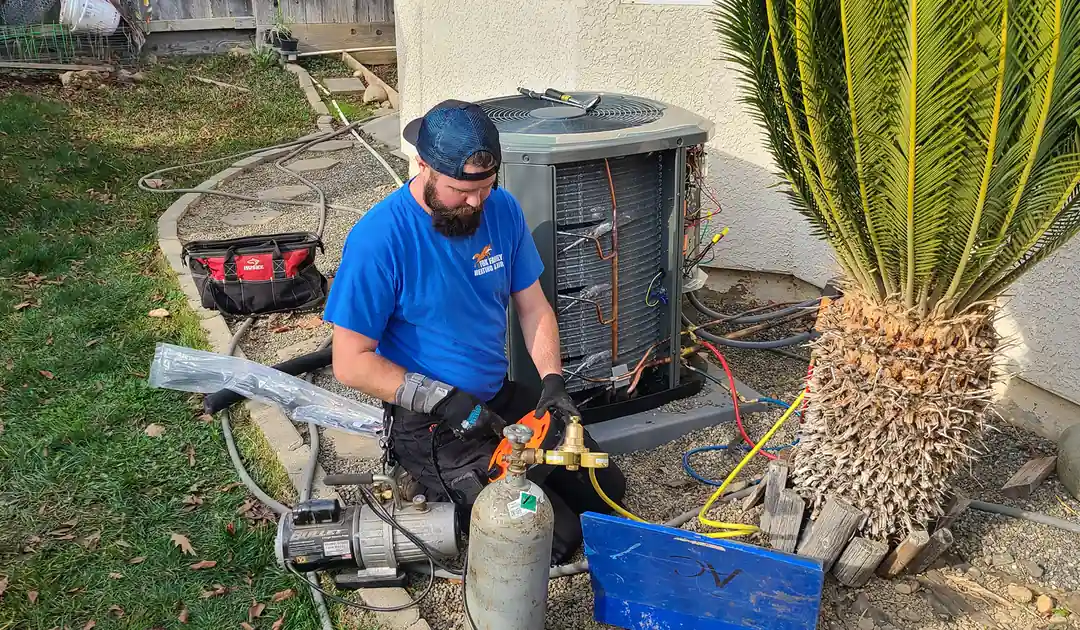
Is your heat pump outdoor unit covered in frost or blowing what looks like smoke on a cold morning? Every winter, homeowners around Rancho Cordova and Sacramento call Fox Family Heating and Air Conditioning worried that something is badly wrong with their system. In many cases, the heat pump is simply moving through a normal defrost cycle. In other cases, the unit really is stuck in ice and needs professional attention.
Understanding how defrost mode works makes it much easier to tell the difference between normal operation and a problem that can damage your equipment or drive up your power bill. This article explains why heat pumps frost up, what a normal defrost cycle looks like, what is not normal, and the most common issues our technicians find on service calls.
Safety note: Before you touch any HVAC equipment, turn off power at the disconnect or breaker. If you are not comfortable working around electrical components, or you see damaged wiring or panels, stop and schedule a professional visit instead. Any work that involves opening the refrigerant circuit must be done by a technician certified under EPA Section 608 of the Clean Air Act. Professional HVAC companies also follow OSHA’s control of hazardous energy standard, 29 CFR 1910.147, for lockout and tagout when servicing energized equipment.
Why Heat Pumps Need Defrost
In cooling season, your heat pump works just like a standard air conditioner. The indoor evaporator coil is the cold coil, the outdoor unit’s coil is the hot coil, and the system carries heat from inside your home to the outside.
In heating season, the heat pump reverses that process. A component called the reversing valve changes the direction of refrigerant flow so that:
- The indoor coil becomes the hot coil that delivers heat to your home.
- The outdoor coil becomes the cold coil that absorbs heat from the outside air.
On cold, damp winter days in the Sacramento Valley, that outdoor coil can easily drop below freezing. When the coil surface temperature gets down around the mid 20s Fahrenheit while the outdoor air is cold and humid, moisture in the air freezes on the coil. At first you see a light layer of frost. If the system keeps running without defrosting, that frost becomes a thick layer of ice.
That ice blocks airflow through the outdoor coil, which makes the heat pump less efficient and can eventually cause damage. Defrost mode is built into the system to prevent that kind of ice buildup.
How Defrost Mode Works
Modern heat pumps use a control board in the outdoor unit to act as the “quarterback” for defrost. That board looks at sensors and run time to decide when the system needs to clear ice from the outdoor coil.
Reversing valve and defrost direction
In heating mode, most residential units in our area are wired so the reversing valve is not energized. If power is lost to the valve, the system defaults to heating. That way, you are more likely to have heat than cooling if something goes wrong.
When the defrost board decides the outdoor coil is too cold and enough time has passed, it briefly switches the system back into cooling mode to thaw the outdoor coil:
- The reversing valve moves, and you may hear a noticeable whooshing sound as the refrigerant reverses direction.
- Hot refrigerant starts flowing through the outdoor coil.
- The indoor coil becomes the cold coil again for a short time, the same way it would in summer.
Since that would normally send cool air into your home, the heat pump also turns on backup heat at the indoor air handler. On many all electric systems, electric heat strips come on inside the air handler to keep the air from feeling too cold while the outdoor unit is in defrost.
Timer or demand defrost control
There are two main ways the defrost board decides when to start a defrost cycle:
- Timed defrost: The board counts how long the compressor has been running in heating mode. When that run time hits a preset interval, such as 45 or 90 minutes, it will check the coil sensor and start a defrost cycle if the coil is cold enough.
- Demand defrost: The board looks more closely at coil temperature and sometimes outdoor air temperature to decide when the coil actually needs to be defrosted, instead of defrosting purely on a timer.
On equipment our technicians see frequently, two conditions usually have to be met before defrost starts:
- The sensor attached to the outdoor coil has dropped to around 26 degrees Fahrenheit.
- The compressor has run long enough to satisfy the timer on the board.
When those conditions are met, the board:
- Sends power to the reversing valve so the system temporarily runs in cooling mode.
- Signals the indoor unit to turn on backup heat so you still feel warm air.
- Shuts off the outdoor fan so the coils warm up faster.
To end the defrost cycle, the board looks for the outdoor coil to warm up to roughly 50 degrees, or it uses a maximum time limit. If that temperature is not reached within a set number of minutes, an override will stop the defrost cycle and return the system to heating.
What Is Normal During Heat Pump Defrost
Because many homeowners have never seen a heat pump defrost before, normal operation can look scary. Here are things that are usually normal:
- Light frost on the outdoor unit: A thin, even layer of frost on the coil in cold weather is expected. The heat pump will clear this during the next defrost cycle.
- Steam that looks like smoke: When the heat pump is in defrost and hot refrigerant is running through an icy coil, the ice melts and steam rises off the unit. From a distance, it can look like the system is smoking, but it is almost always just water vapor.
- Outdoor fan shutting off briefly: During defrost the outdoor fan usually stops so the coil can warm up faster. You may hear the compressor running and see steam rising even though the fan blades are still.
- Short defrost cycles every so often: Depending on conditions and the control board, the unit may defrost every 45 to 90 minutes of run time when it is cold and damp outside. Each cycle may last a few minutes before the system switches back to heating.
- Slightly cooler air from the vents for a few minutes: While the outdoor unit is defrosting, backup heat is working to offset the cooling effect indoors. You may still notice the air feels a bit less warm for a short period, especially if your home uses electric heat strips rather than a gas furnace as backup heat.
If your system only shows these signs occasionally on cold mornings and then goes back to normal heating, the heat pump is likely doing exactly what it is designed to do.
What Is Not Normal
Other behaviors point to a problem with the heat pump, the defrost system, or airflow. These are situations where you should shut the system off and schedule service:
- The outdoor unit is a solid block of ice. A little frost is fine, but if the entire unit is encased in thick ice, the system is not defrosting properly. Running it that way can damage the compressor and fan.
- Ice keeps returning immediately after you thaw it. If you turn the system off, allow it to thaw, then restart it and it quickly ices up again, there is an underlying issue that needs to be diagnosed.
- The outdoor fan never runs in heating mode. If the fan motor has failed, the coil can freeze quickly. You may hear the compressor running but see no fan movement even when the system is not in defrost.
- The unit seems to stay in defrost most of the time. Very frequent or extended defrost cycles can indicate a sensor problem, a control board issue, or a refrigerant problem that keeps the coil too cold.
- Loud banging or grinding noises. A quick whoosh when the reversing valve shifts is normal. Repeated banging, grinding, or metal scraping noises are not.
- Your home never warms up. If the thermostat is calling for heat for long periods and the house temperature barely climbs, the system may not be delivering enough capacity because of icing, low airflow, or another fault.
In any of these cases, it is better to turn the system off at the thermostat and breaker and have an HVAC technician evaluate it instead of letting it struggle and possibly fail completely.
Troubleshooting Common Heat Pump Defrost Problems
Homeowners can safely check a few basic items before calling for service. Anything that involves opening electrical panels, testing voltage, or accessing refrigerant lines is a job for a trained technician.
1. Check your thermostat and modes
- Make sure the thermostat is set to “Heat” or “Auto,” not “Cool.”
- If you have an “Emergency Heat” setting, use it only if the outdoor unit is not working. Emergency heat will usually rely on electric strips or a gas furnace only, which can be more expensive to run.
- Verify the temperature setting is above the current room temperature and that the system actually turns on when the thermostat calls for heat.
2. Replace or clean your air filter
Restricted airflow through the indoor coil can cause the system to run longer and operate at lower pressures, which may contribute to icing problems and poor performance. Make sure:
- The return filter is clean and installed correctly.
- You are using the correct size and type recommended for your system.
Even though the defrost cycle is controlled outside, good airflow inside helps the heat pump operate within its designed range.
3. Clear debris around the outdoor unit
Air must move freely through the outdoor coil. Check for:
- Leaves, grass clippings, or dirt packed against the coil.
- Snow, mulch, or yard items pushed up against the sides of the unit.
- Overgrown shrubs within a foot or two of the coil surface.
Turn off power to the unit and gently rinse the coil with a garden hose when outdoor temperatures are above freezing. Never use high pressure or harsh chemicals on the coil and never try to chip ice off with a sharp tool, since that can damage the fins or tubing.
4. Watch how the unit behaves in cold weather
If it is safe to do so, observe a full heating and defrost cycle on a cold morning:
- Note how long the system runs before defrost starts.
- Watch for the fan turning off and steam rising from the unit.
- Listen for the reversing valve whoosh when the system goes into and out of defrost.
If the unit never appears to go into defrost even though heavy frost is building up, or if it seems to be stuck in defrost most of the time, it is time to call a professional.
5. What our technicians check on a service call
When Fox Family Heating and Air Conditioning technicians are called to a home with a frozen heat pump, we go beyond the basic visual checks. Depending on the system, a technician may:
- Test the defrost sensor on the outdoor coil to see if it is reading temperature correctly.
- Verify that the defrost control board is receiving the right signals and is sending power to the reversing valve, indoor heat strips, and outdoor fan when required.
- Measure refrigerant pressures and temperatures to confirm the system is charged correctly and the reversing valve is operating as it should.
- Check indoor and outdoor coils for hidden airflow restrictions.
- Confirm that electrical connections and components are in good condition.
Because many defrost problems involve live 240 volt circuits and pressurized refrigerant, this level of diagnosis should only be handled by licensed HVAC professionals.
Sacramento Winter Considerations for Heat Pumps
The Sacramento Valley has relatively mild winters compared to much of the country, but local weather still affects how often your heat pump defrosts.
Typical winter conditions for our area include:
- Design temperatures around 30 degrees Fahrenheit on the coldest nights.
- Average January lows in the upper 30s.
- Periods of fog and damp air that increase humidity.
Those conditions are perfect for frost to form on an outdoor heat pump coil. The first real cold snap usually arrives in late November, and that is when Fox Family Heating and Air Conditioning starts getting calls from homeowners who see their outdoor units steaming and think the system is on fire.
Because our winters are not extremely cold, heat pumps perform very well in the Sacramento region when they are installed and maintained properly. Regular tune ups help ensure the defrost system is working correctly before the cold season starts. During those visits, our technicians inspect the outdoor coil, verify electrical connections, check sensors and boards for signs of trouble, and make sure backup heat is ready to support the defrost cycle.
If you have solar or are trying to keep electric bills under control, keeping the defrost system operating correctly also helps reduce wasted energy from excessive ice buildup, long run times, or constant reliance on emergency heat.
Conclusion
Seeing your heat pump covered in frost or blowing clouds of steam on a chilly Sacramento morning can be unsettling, but in many cases it is simply the defrost mode doing its job. A light layer of frost, brief periods when the outdoor fan stops, and short bursts of steam are all normal when the system is clearing ice from the outdoor coil.
If the unit is encased in solid ice, never seems to defrost, makes unusual noises, or cannot keep your home warm, there is likely a problem with airflow, the defrost sensors, the control board, or the reversing valve. Basic steps like changing your filter and clearing debris can help, but more complex issues should be handled by a professional.
Fox Family Heating and Air Conditioning serves Rancho Cordova, Sacramento, and Northern California. If you need help with heat pump defrost problems, give us a call!