Best Gas Furnace for 2025 (Updated)
One of the most common questions I get as an HVAC contractor in Sacramento is, “Which gas furnace systems are the best in 2025?” I see a ton of articles online about this topic; many written by people who aren’t even in the HVAC industry! Some compensated blog writer gave you a list of top-rated systems – systems they’ve never even touched. These bloggers are telling people that nationally recognized economy-line systems are better than those that will truly last you a long time.
Best HVAC Systems
Just like a summer post about which AC systems are the best, I have always felt like three manufacturers have had the best reputation for the last few decades. And in no particular order, they are:
- American Standard
- Carrier/Bryant
- Lennox

Best Gas Furnace Systems for 2025
A Special Note
Before I list the rest of the systems, I want to mention that furnace systems come fully assembled at the factory and are ready to work. However, it takes experienced technicians to modify the unit per the manufacturer’s instructions to conform to your specific home’s demands. The last step of installing it “in the field” and adding whatever additional parts to bring it up to the proper building code in your area is up to the contractor you choose.
That’s an important point because buying a Carrier or Lennox includes buying it from a professional, detail-oriented, reliable contractor you trust and are comfortable with bringing it to life. If someone is going to install it for you, but you can’t find them after the installation because they sell systems so cheap that they’re out of business, or they simply won’t pick up the phone, that’s not going to help you when you need some follow-up.
You can buy any system, but if the blower settings, gas pressures, static air pressures, high and low voltage wiring, fuse sizes, a precision refrigerant charge, airflow, water drainage, gas piping, intake air, exhaust system, thermostats, and other safety codes aren’t set up correctly, you’ll find your new system not lasting nearly as long as it could have. It can be the difference between your system lasting ten years or 20 years.
With recent updates to California’s Title 24 energy codes and the national transition to higher-efficiency standards like SEER2 and AFUE requirements, having a properly configured and commissioned furnace is more crucial than ever in 2025.
Consumer Reports
As of the most recent available Consumer Reports data (covering systems installed between 2005 and 2021), over 36,000 gas furnace owners were surveyed. Their owner satisfaction ratings are based on the percentage of members who are extremely likely to recommend their gas furnace brand to friends and family.
The manufacturers of today’s residential heating and cooling systems are:
- Rheem, who also makes:
- Ruud
- Daiken, who makes:
- Goodman
- Amana
- Daiken
- Janitrol
- Bosch, which has become more established in the U.S. since 2023, now makes its own pretty good systems. We sell their inverter split systems and package units.
- Nortek, which makes:
- Intertherm
- Maytag
- Frigidaire
- Nordyne
- Johnson Controls, which makes:
- York
- Coleman
- Luxaire
- International Comfort Products (ICP), which makes several brands. The most prominent are:
- Day & Night
- Tempstar
- Comfortmaker
- Heil
- Keeprite
- Lennox, who also makes:
- Armstrong
- Ducane
- Aire-Flo
- Concord
- Carrier, also makes:
- Weathermaker
Isn’t it crazy the limited number of true manufacturers but the 30+ brands we have to choose from? No wonder it’s hard to determine the best gas furnace for 2025!
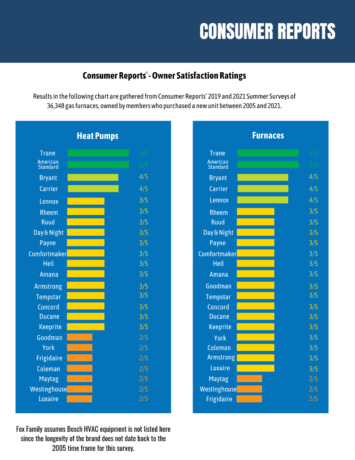
Top Gas Furnace Brands for Owner Satisfaction (2025 Update)
Note: These satisfaction ratings are based on Consumer Reports data up to 2021 and may not reflect newer product innovations or changes in manufacturer support since then.
Highest Rated for Owner Satisfaction:
- American Standard – rated 5/5
Second Tier:
- Carrier rated – 4/5
- Bryant rated – 4/5
- Lennox rated – 4/5
Mid-Tier HVAC Systems:
- Rheem rated – 3/5
- Ruud rated – 3/5
- Armstrong rated – 3/5
- Concord rated – 3/5
- Ducane rated – 3/5
- Amana rated – 3/5
- Comfortmaker rated – 3/5
- Day & Night rated – 3/5
- Heil rated – 3/5
- Keeprite rated – 3/5
- Tempstar rated – 3/5
- Goodman rated – 3/5
- Coleman rated – 3/5
- Luxaire rated – 3/5
- York rated – 3/5
Lower-Tier HVAC Systems:
- Frigidaire rated – 2/5
- Maytag rated – 2/5
- Westinghouse rated – 2/5
How to Choose the Right Furnace for Your Home
Picking the “best” gas furnace for 2025 is really about choosing the best fit for your home, your comfort preferences, and how you actually use heat in Northern California. Here’s the exact way we recommend narrowing it down.
Start with your comfort goals; Before you compare brands, decide what you want to feel day to day.
- If you hate temperature swings, look at a two-stage or modulating furnace.
- If you want a quieter system: Prioritize a variable-speed blower motor and staged heating.
- If you just want dependable heat on a budget: A quality single-stage furnace can still be a solid choice, especially with a great installation.
Choose the right efficiency level (80% vs 90%+ AFUE)
Efficiency is important, but it should make sense for your home and your install.
80% AFUE (non-condensing)
- Usually lower upfront cost
- Often, simpler venting in certain existing setups
- Great option when you want reliable heat without major changes
90%+ AFUE (high-efficiency, condensing)
- Uses less fuel, especially for households that run heat often
- Can be a smart long-term move if you plan to stay in the home
- May require changes to venting and condensate draining, depending on where your furnace is installed
In our area, winter is not extreme, but evenings and mornings can still be cold. If you run your heat regularly, high efficiency can be worth it. If you only heat occasionally, comfort features and proper sizing can matter more than squeezing out the last few percent of AFUE.
Decide on staging: single-stage, two-stage, or modulating
This is one of the biggest differences you’ll notice as a homeowner.
- Single-stage: Heat is either on or off. This is the most basic and usually the least expensive.
- Two-stage: Runs on a lower stage most of the time, then ramps up when needed. Better comfort, better humidity control, usually quieter.
- Modulating: Adjusts in very small increments to maintain the most even temperature. Best comfort, typically premium price.
If you work from home, have hot and cold spots, or want your house to feel more consistently comfortable, two-stage or modulating is usually where people feel the upgrade.
Pay attention to the blower motor (it affects comfort more than people expect)
Even if two furnaces have similar AFUE ratings, the blower motor and airflow control can make one home feel noticeably better than the other.
A variable-speed blower can help with:
- More even temperatures from room to room
- Quieter operation
- Better filtration performance (because airflow is steadier)
- Improved comfort when paired with the right thermostat and ductwork
Make sure the furnace is sized correctly (this matters more than brand)
A furnace that is too big can short-cycle, heat unevenly, and wear out faster. A furnace that is too small can struggle on colder nights. Proper sizing should be based on a real load calculation, not a guess and not “whatever your old unit was.”
Think about your ductwork and airflow
A new furnace can only perform as well as the duct system allows. If your ducts are undersized, leaky, or restrictive, you can end up with:
- Hot and cold spots
- A noisy system
- Higher utility bills
- Premature wear on the blower motor
If you’ve ever had weak airflow in certain rooms, this is the moment to address it.
Match features to your budget (and spend where it actually counts)
If you’re trying to balance budget with performance, this is a smart way to prioritize:
- Proper sizing + quality installation
- Safe, correct venting and combustion setup
- Two-stage heat (comfort upgrade most people notice)
- Variable-speed blower (quiet + airflow comfort)
- Highest AFUE (when it makes sense for your home)
Don’t forget the thermostat
Some comfort features only shine when the thermostat is compatible. If you are upgrading to a staged furnace, it’s worth checking whether your thermostat supports staging properly, or if a matching thermostat is recommended.
If you want help choosing the right setup for your home in the Sacramento area, we can evaluate your existing system, ductwork, and venting, then recommend options that make sense for your comfort and budget.
Installation Quality Checklist (This Decides Performance More Than Brand)
Two homeowners can buy the same furnace and get totally different results. The difference is almost always the installation. Here’s a practical checklist you can use when comparing contractors, or simply to understand what a quality install should include.
Design and sizing
- A proper load calculation (Manual J) to size the furnace correctly
- Equipment selected based on your home, not based on what was there before
- Confirmed furnace temperature rise range and target airflow for your setup
Airflow and ductwork verification
- Static pressure cwas hecked to make sure the duct system can support the new furnace
- Blower speed and airflow (CFM) are set correctly for heating and any cooling that shares the system
- Duct issues flagged (leaks, restrictions, undersized returns, crushed flex duct)
- Filter setup verified so it’s not choking airflow (this is common)
Gas, combustion, and safety setup
- Gas line sizing verified and sediment trap installed where required
- Gas pressure adjusted to manufacturer specs
- Combustion tested and verified for safe operation
- Carbon monoxide safety checks completed
- All safety controls tested (limit switch, pressure switch, flame sensor operation)
Venting and condensate handling (especially on 90%+ furnaces)
- Proper vent material and vent routing used
- Intake and exhaust clearances verified
- Condensate drain installed correctly with a safe drain path
- Condensate trap and drain slope confirmed
- If needed, the condensate pump is installed and tested
Electrical and controls
- Proper electrical disconnect and wiring checked
- Thermostat wiring verified for staging and blower control
- System settings configured in the control board (staging, delays, comfort settings)
- Startup settings are documented so they can be referenced later
Final testing and homeowner handoff
- System run-tested in heating mode
- Supply temperature checked and confirmed within spec
- Airflow and noise checked at registers
- Filter size confirmed and replacement schedule explained
- Warranty registration guidance provided (if applicable)
- Permits and inspections are handled when required
Tip: A great contractor can show you real numbers (static pressure, gas pressure, temperature rise). If a company can’t explain how they set the system up or verify it, that’s a red flag. If you want, we can also inspect a recent install (even if another contractor installed it) and confirm the setup is safe, sized correctly, and operating the way it should.
Maintenance for Maximum Lifespan (What a Tune-Up Includes)
Most furnaces can last a long time when they’re installed correctly and maintained consistently. Skipping maintenance often leads to the same issues: airflow problems, ignition failures, nuisance shutdowns, and expensive repairs at the worst time.
How often should a furnace be serviced?
For most homes, we recommend professional maintenance once a year, ideally before the colder season starts. If your furnace is older, runs frequently, or your home has dust or pet hair, you may benefit from a mid-season filter check as well.
What professional furnace maintenance should include
A proper tune-up is more than a quick look. A thorough maintenance visit typically includes:
- Inspect and clean the burners (as needed)
- Inspect the heat exchanger area for signs of damage or abnormal operation
- Test ignition system and flame sensor, clean if needed
- Verify safeties (limit switch, pressure switch, rollout safety)
- Check gas pressure and verify proper operation
- Inspect venting and confirm proper drafting
- Check blower motor and wheel condition, verify airflow settings
- Measure temperature rise to confirm the furnace is operating within spec
- Inspect the filter condition and confirm the correct filter type and fit
- For 90%+ furnaces: check condensate drain, trap, and pump (if installed)
Homeowner maintenance you can do (and it really helps)
You don’t need to be an HVAC tech to protect your system. These simple steps make a real difference:
Replace your air filter consistently
The “right” schedule depends on your home.
- Every 1 to 2 months: homes with pets, allergies, or high dust
- Every 2 to 3 months, many typical households
- More often, if you notice airflow dropping or dust building up quickly
If you use a high-MERV filter, make sure your system can handle it. Some systems do fine, others end up with restricted airflow.
Keep supply vents and return grilles clear
Blocked returns and vents can cause noise, poor airflow, and overheating.
Pay attention to changes
Call for service if you notice:
- New rattling, humming, or banging noises
- Burning smells that do not go away quickly
- Short cycling (turning on and off frequently)
- Uneven heat roofrom m to room that wasn’t there before
- Your CO detector alerts (always treat this seriously)
Keep the area around the furnace accessible
Especially for closet or garage installs. Restricted airflow around the unit and crowded access can create safety and service problems. If you’re unsure what your furnace needs, we can help you set up a simple maintenance plan that matches your system and how your household uses heating.
Frequently Asked Questions
How long should a gas furnace last?
Many furnaces last 15 to 20 years, sometimes longer with great installation and regular maintenance. Airflow problems, oversizing, and skipped maintenance are some of the biggest reasons furnaces fail early.
What matters more, brand or installation?
Installation. A premium furnace installed poorly can perform worse and break sooner than a mid-tier furnace installed correctly. Correct sizing, airflow, combustion setup, and venting are the foundations of reliability.
Do I need to replace my thermostat when I replace my furnace?
Not always, but sometimes it’s recommended. If you’re upgrading to a two-stage or modulating furnace, your thermostat needs to be compatible so you actually get the comfort benefits you’re paying for.
What’s the best time of year to replace a furnace?
Before the cold season is ideal because you avoid emergencies and you typically have more flexibility in scheduling. That said, if your furnace is unsafe or unreliable, it’s better to replace it sooner rather than waiting.
Why do furnace installation prices vary so much?
It usually comes down to the details of the job, like:
- Efficiency level and venting requirements
- Furnace location (attic, closet, garage)
- Ductwork condition and airflow fixes
- Electrical, drain, and code updates
- Permit and inspection requirements
Will a new furnace fix hot and cold spots?
Sometimes, but not always by itself. Hot and cold spots are often caused by duct design, return air problems, or airflow imbalance. A new furnace can help, but the best fix usually includes evaluating and correcting airflow and duct issues.
Conclusion
When it comes to deciding which gas furnace systems are the best, you have three systems perennially at the top of the list: American Standard, Carrier, and Lennox. While their single-stage and two-stage systems have similar capabilities, efficiencies, and life spans, it’s in their variable-speed and modulating models where you really begin to see enhanced comfort, quieter operation, and lower utility bills.
In 2025, modulating furnaces with ECM (electronically commutated motor) blowers and advanced diagnostics are quickly becoming the gold standard in energy efficiency and comfort. These systems adapt more precisely to your home’s needs and help extend the life of the system by reducing unnecessary wear.
When you start looking for a vehicle, you pretty much have a brand name in mind. You might get a higher or lower-end model with fewer bells and whistles, but maybe you’ve always felt comfortable driving a GMC truck over a Toyota truck. Choosing a furnace is no different – brand familiarity, contractor trust, and proper setup are what truly define value.
In another post, let’s talk about the other heating systems in homes across America – Best Heat Pumps for 2025
Subscribe to our newsletter or check out our YouTube channel for more HVAC tips and product reviews.
Serving Sacramento and Northern California
Fox Family Heating & Air Conditioning proudly serves Rancho Cordova, Sacramento, and Northern California. If you’re looking to schedule expert HVAC service or a new furnace installation in 2025, give us a call or book your appointment online today!
