How to Handle a Refrigerant Leak in Your Home | Fox Family Heating and Air Conditioning
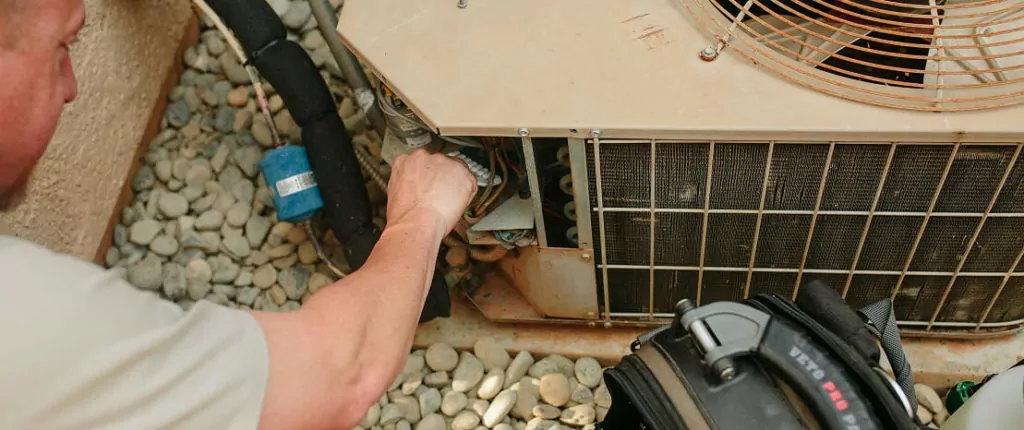
When your air conditioner is running constantly, but your home still feels warm, it is natural to wonder if you have a refrigerant leak. Our technicians at Fox Family Heating and Air Conditioning see this problem every cooling season throughout Rancho Cordova, Sacramento, and the rest of the Sacramento Valley, especially once the triple-digit summer days arrive.
Refrigerant is not a fuel that gets used up. If your system is low, it almost always means refrigerant has escaped somewhere in the sealed circuit. Understanding what that means, how leaks are found, and what your options are will help you make a smart decision for your home and budget.
Safety note: Homeowners should never attach gauges, add refrigerant, or cut into refrigerant lines. Under EPA Section 608 rules, anyone who opens the refrigerant circuit or adds refrigerant to stationary equipment must hold an EPA technician certification. If you ever feel lightheaded, short of breath, or notice a strong chemical odour near your equipment, step outside for fresh air and call a professional.
Signs of a Refrigerant Leak
Refrigerant leaks can be subtle at first. Many homeowners do not realise anything is wrong until the system is already quite low. Common signs include:
- Long run times with poor cooling: The system runs for much longer than normal, yet rooms still feel warm or muggy.
- Higher electric bills: You might notice a spike in your utility bill even though your thermostat settings have not changed.
- Ice on the refrigerant lines or coil: You may see frost or ice building up on the copper lines outside or on the indoor evaporator coil. This often happens when the system is low on charge and airflow or refrigerant conditions are not balanced.
- Warm air from the vents: In more severe cases, the air coming out of the supply vents may feel only slightly cool or even room temperature while the outdoor unit runs constantly.
- Hissing or bubbling noises: A small, sharp hissing sound or bubbling near a joint, valve, or coil can sometimes indicate an active leak.
These symptoms can overlap with other problems like airflow restrictions or electrical issues. A professional diagnosis is the only way to confirm whether low refrigerant is really the cause.
Is Refrigerant Dangerous?
Most modern home air conditioners use either R-410A or, in newer systems, lower global warming potential refrigerants such as R-454B. Older systems may still operate on reclaimed R-22. Each of these has different environmental effects and handling requirements, but they share some common safety considerations.
- Health risks in the home: In an open space, a small refrigerant leak usually dissipates quickly. However, in confined spaces, refrigerant can displace oxygen and may cause dizziness, headaches, or nausea. Direct skin contact with liquid refrigerant can cause frostbite-type injuries.
- Fire and equipment safety: New A2L refrigerants like R 454B and some uses of R 32 are mildly flammable. Systems that use these refrigerants are designed with specific safety controls, and only trained technicians should work on them.
- Environmental impact: R-22 is an ozone-depleting HCFC that has been completely phased out since 2020. R 410A and other HFCs do not damage the ozone layer, but they do have high global warming potential. Any refrigerant leak, even from a small residential system, contributes to environmental impact when it escapes into the atmosphere.
Federal refrigerant leak repair requirements under Section 608 of the Clean Air Act focus on larger commercial and industrial systems, for example, equipment that holds 50 pounds or more of an ozone-depleting refrigerant. Most home air conditioners fall below that threshold, so the EPA does not generally require every small residential leak to be repaired. EPA rules do still prohibit intentionally venting refrigerant during service, so certified technicians must recover and contain it instead of releasing it into the air. At Fox Family Heating and Air Conditioning, we strongly encourage repairing leaks whenever practical, both for the health of your equipment and for the environment.
Why You Should Not Just “Top Off” The Refrigerant
Homeowners sometimes ask if we can simply refill the refrigerant and get them cooling again. In the HVAC world, this is often called a “gas and go” service. While adding refrigerant will usually restore cooling for a while, it rarely solves the underlying problem.
Here is why repeatedly topping off is a bad idea:
- It gets expensive fast: As of 2025, reclaimed R 22 can cost in the range of 100 to 200 dollars per pound. Even R 410A has climbed in price as the federal phase-down continues. If your system needs several pounds every season, those charges add up quickly.
- You are still losing refrigerant: Each time the system leaks down, more refrigerant escapes into the atmosphere. This increases environmental impact and leaves you without cooling when you need it most.
- Low refrigerant can damage the compressor: Running an air conditioner that is significantly undercharged can cause the compressor to overheat or lose lubrication. A failed compressor is often one of the most expensive repairs on the system.
- You face repeated breakdowns: If the leak is large, the refrigerant you paid for today could be gone in days or weeks. That means more service calls, more downtime, and more frustration.
In rare situations, adding refrigerant once and monitoring performance may make sense, especially if the leak appears to be very small or if this is the first time the system has been low. However, if your system has needed refrigerant more than once, it is time to talk seriously about finding and fixing the leak or planning for replacement.
How Technicians Find Refrigerant Leaks
Because the refrigerant circuit is sealed, finding leaks requires specialized tools and a systematic approach. At Fox Family Heating and Air Conditioning, our technicians usually follow three levels of leak detection so you know what to expect.
Level 1: Visual, Electronic, and Soap Bubble Testing
The first step is a detailed inspection of the most accessible parts of the system:
- The outdoor condenser coil and service valves
- The indoor evaporator coil and drain pan
- The refrigerant line set that runs between them
During this level of leak search, a technician may:
- Look for oily residue on coils, fittings, or in the drain pan, which often marks the spot where refrigerant and lubricating oil are escaping.
- Use an electronic leak detector around brazed joints, Schrader cores, and other common leak points.
- Apply a soap solution to suspected areas and watch for bubbling that indicates a leak.
This type of search typically lasts up to about an hour. If we find an accessible leak during this step, the repair and any necessary leak search costs are usually combined into a single project so you are not paying twice for the same work.
Level 2: UV Dye Circulation And Return Visit
If the initial inspection does not locate the leak, the next option is to add a small amount of refrigerant-safe dye to the system and run it for several weeks. The dye circulates with the refrigerant and oil.
On a return visit, the technician uses UV light and visual inspection to look for bright dye staining at the leak site. This approach is especially useful for tiny leaks in coils or hard-to-reach parts of the line set. Once the leak is identified, the technician can recover the remaining refrigerant, make the repair, replace the filter-drier, and evacuate the system properly before recharging.
Level 3: Isolating And Pressure Testing Each Component
Level 3 leak searches are rare, but they are sometimes necessary when a persistent leak cannot be found any other way. In this method, the technician:
- Separates the outdoor coil, indoor coil, and line set from each other.
- Brazes on service valves if needed to access each section.
- Pressurizes each component individually with dry nitrogen and monitors it over time with a sensitive gauge.
This process takes more labor and often requires the system to be down for days at a time while pressures are monitored. Because of the time and cost involved, our team will always discuss whether it makes more sense to continue searching or to start planning for equipment replacement instead.
Repair Options: Leak Repair vs Coil or System Replacement
Once the leak has been located, you and your technician can review options. The right choice depends on the age of the system, the type of refrigerant, the size and location of the leak, and your long-term plans for the home.
Repairing A Leak
Leak repairs can be very straightforward or quite involved:
- Service valve or Schrader core leaks: These are often relatively simple repairs. Replacing a faulty Schrader core or tightening a flare connection can solve the problem if everything else is in good shape.
- Line set leaks: If the leak is in an exposed section of copper tubing, it may be possible to repair or replace only the damaged section. If the line set is buried in a wall or under concrete, replacement can be more complicated.
- Small leaks in accessible coil areas: Some coil leaks can be repaired if they are in a spot where brazing is practical, and the metal is still sound.
Repair is usually the first option we look at on newer systems with R 410A or A2L refrigerants, especially if the rest of the unit is in good condition.
Replacing A Coil
In many R-22 systems and some early R-410A models, the indoor evaporator coil is the weak link. Certain copper coil designs manufactured between roughly 2008 and 2015 were especially prone to formicary corrosion and small pinhole leaks.
If the coil has multiple leaks or is badly corroded, replacing the entire coil often makes more sense than attempting several small repairs. This can restore performance and reduce the chance of another leak in the near future, but it is still a significant investment. You and your technician should weigh coil replacement against the age of the outdoor unit and the cost difference between coil-only work and full system replacement.
Replacing The Whole System
If your system is:
- More than 12 to 15 years old,
- Running on R 22, or
- Facing both major leak repairs and other costly issues,
Replacement may be the most cost-effective solution. New systems use current refrigerants such as R 410A or, increasingly, lower GWP A2L options like R 454B, and they are designed to meet updated efficiency standards such as SEER2.
While replacement is a bigger upfront investment, it often lowers your utility bills, reduces the risk of mid-summer breakdowns, and ensures parts and refrigerant will be available for years to come. Our technicians can walk you through load calculations, equipment options, and what makes sense for homes in the Sacramento Valley climate.
When To Call A Professional
You should reach out to a licensed HVAC contractor as soon as you suspect a refrigerant issue. In particular, call right away if:
- Your system needs refrigerant more than once.
- You see ice on the evaporator coil or refrigerant lines.
- The outdoor unit is running, but the air from your vents is barely cool.
- You hear hissing at the service valves or notice oily spots around the equipment.
- You are not comfortable troubleshooting anything near electrical or refrigerant components.
When you schedule a visit with Fox Family Heating and Air Conditioning, try to share as much history as you can. Have other companies added refrigerant in the past few years? How long does the system usually run before it starts struggling again? These details help our technicians move quickly and recommend the best long-term solution.
Conclusion
Refrigerant leaks are one of the most common air conditioning problems we see in Rancho Cordova, Sacramento, and the surrounding Northern California communities. They can start small, but over time, they drive up your energy bills, strain your equipment, and contribute to environmental impact if they are not addressed.
By understanding the warning signs, the basic safety risks, and the leak search and repair options available, you can decide whether repair, coil replacement, or full system replacement is the best fit for your situation. Our goal is always to explain your choices clearly so you feel confident in the path you choose.
If you suspect a refrigerant leak or your AC simply is not keeping up anymore, our team is here to help. Ready to schedule service? Call us at 916-877-1577 or book an appointment online.
Fox Family Heating and Air Conditioning serves Rancho Cordova, Sacramento, and Northern California. If you need help with refrigerant leaks or AC performance issues, give us a call!