Low NOx Furnace Requirements in California for 2025
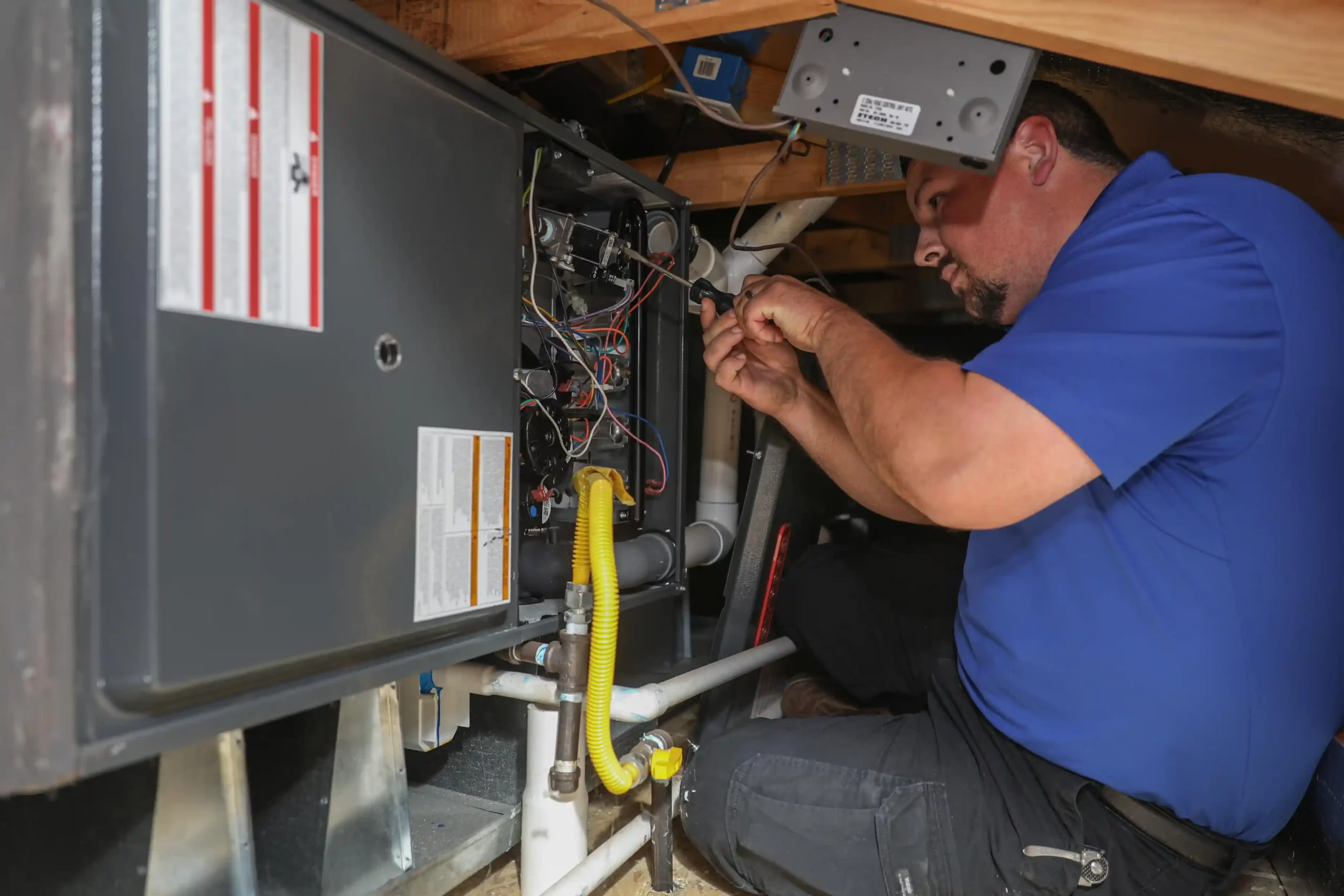
Have you been told you need a low NOx furnace to replace your current system in California, but no one has really explained what that means or why it matters? If you live in Rancho Cordova, Sacramento, or anywhere in Northern California, you are not alone. Our technicians hear this question almost every week from homeowners who just want to know whether their existing furnace is still acceptable and what the rules are for a new one.
In this guide, we will walk through what low NOx means, why California cares so much about it, how low NOx furnaces are built differently, what applies in the Sacramento area, and how much of a price difference you can expect. By the end, you will understand what inspectors and utilities are looking for and how to choose a furnace that keeps your family comfortable while staying compliant with current regulations.
What Is Low NOx?
Understanding NOx
NOx is short for nitrogen oxides, a group of gases that form whenever fuel is burned at high temperatures. For residential gas furnaces, the two main ones are:
- Nitric oxide, abbreviated NO
- Nitrogen dioxide, abbreviated NO2
The U.S. Environmental Protection Agency (EPA) explains that nitrogen dioxide and other nitrogen oxides damage the human respiratory system, contribute to acid rain, and help form ground level ozone and fine particles. These pollutants are regulated under the National Ambient Air Quality Standards because of their health and environmental impacts.
When your gas furnace runs, it burns natural gas in a sealed combustion chamber. The heat from that combustion is transferred into the air moving through your ductwork, while the combustion gases are sent outside through the vent pipe. The NOx that comes from a furnace does not mix into the air blowing into your living space, but it does leave the flue and enter the outdoor air around your home and neighborhood.
What “low NOx” actually means
Regulators measure furnace NOx emissions by how many nanograms of NOx are produced for each joule of heat output. Many older furnace designs produced significantly more NOx than current low NOx models, which is why manufacturers have redesigned burners, heat exchangers, and controls to reduce emissions.
Low NOx furnaces are engineered to keep NOx output well below the limits set by air quality rules. In Southern California, for example, South Coast Air Quality Management District Rule 1111 sets very strict NOx emission limits for most new residential natural gas central furnaces. Manufacturers design specific low NOx model lines to meet those requirements, and those same models are often sold across much of California.
Exact limits and timing can vary by air district, and rules can be updated over time. As of late 2024, many new gas furnaces marketed for use in California homes are low NOx or ultra-low NOx models. Availability and requirements can change, so it is always a good idea to confirm with your contractor or furnace manufacturer that the model you are considering is listed as compliant for your area.
Why California Requires Low NOx
Air quality and public health
California has some of the toughest air quality rules in the country because so many regions struggle with smog and fine particle pollution. Even though a single household furnace does not seem like a big source by itself, there are millions of residential heating systems running every winter. All of those burners together add up to a meaningful share of NOx emissions.
NOx from furnaces and other combustion sources:
- Contributes to ground level ozone, which can make it harder to breathe
- Increases asthma attacks and other respiratory flare ups
- Helps form fine particles that travel deep into the lungs
- Plays a role in haze and reduced visibility on hot summer days
For families with kids, older adults, or anyone with asthma or COPD, reducing NOx in the air is not an abstract goal. It can directly affect how often someone coughs, wheezes, or needs to reach for an inhaler.
Climate and statewide emission goals
The EPA and other environmental agencies note that emissions from homes and buildings are a meaningful share of overall air pollution and greenhouse gases. While natural gas furnaces mainly get attention for carbon dioxide, NOx is another regulated pollutant tied to both local air quality and broader environmental damage.
By tightening NOx limits and pushing higher efficiency equipment, California is trying to:
- Reduce local smog and health impacts
- Support long term climate and greenhouse gas goals
- Encourage cleaner technologies like heat pumps over time
Low NOx furnaces are one of the stepping stones in that transition. In some parts of the state, local districts are already planning future rules that move from low NOx toward very low or zero NOx heating options for certain kinds of buildings.
How Low NOx Furnaces Are Different
Controlling flame temperature and mixture
The main factor that drives NOx production inside a furnace is flame temperature. The hotter and more intense the flame at the burners, the more NOx tends to form. Low NOx furnace designs focus on controlling that flame and mixing the fuel and air more precisely.
Manufacturers use a combination of:
- Carefully tuned air-to-fuel ratios at the burners
- Pre-mixed burner technology that blends gas and air before ignition
- Advanced inducer motors that help manage combustion airflow
- Burner and heat exchanger shapes that spread out and stabilize the flame
These design changes keep the flame hot enough to burn the fuel completely, while still avoiding the extremely high peak temperatures that create excess NOx.
Smarter controls and sensors
Many newer low NOx furnaces also use smarter control boards and sensor feedback to keep combustion in the ideal range, even as conditions change. The furnace may adjust combustion based on:
- Outdoor temperature and humidity
- Small differences in gas quality from the utility
- Changes in duct static pressure and airflow inside the home
When a low NOx furnace installation is done and set up correctly, combustion stays in a narrow window where both NOx and carbon monoxide remain within the manufacturer’s tested limits.
Proper installation still matters
Even the best low NOx furnace needs proper installation to perform as designed. Two things matter a lot:
Airflow through the system
The ductwork has to be sized so the blower can move the right amount of air across the heat exchanger. If static pressure is too high because of undersized returns, restrictive filters, or crushed ducts, the furnace can run hotter and may not stay within the recommended temperature rise.
Gas pressure at the valve
The inlet and outlet gas pressures at the furnace gas valve must be set to the manufacturer’s specifications. Too much gas raises flame temperature and NOx. Too little gas can increase carbon monoxide. Our installers use manometers and combustion analyzers to dial these settings in.
When our team installs a low NOx furnace, we perform a combustion analysis at startup to verify that combustion air, flue gases, and temperature rise are all within the manufacturer’s recommended ranges.
Sacramento Area Requirements in 2025
Statewide rules and local air districts
California furnace requirements are shaped by both statewide codes and local air quality districts. For a typical homeowner in or around Sacramento, there are three main layers to be aware of:
- State building and energy codes that govern efficiency and safety
- Local air quality management district rules that address NOx emissions
- Permit and inspection requirements in your city or county
Some air districts, such as South Coast Air Quality Management District in Southern California, have led the way with very strict low NOx limits under Rule 1111 for central gas furnaces. Other districts have adopted similar limits or followed the same basic approach when approving new furnace installations.
In the Sacramento region, furnace installations must comply with state energy codes and the rules of the local air quality management districts that cover the area. As of late 2024, many gas furnaces installed in California single family homes are low NOx models that meet current emission limits set by state and local regulations.
Because local rules can change, and different air districts can have slightly different requirements, it is always smart to:
- Ask your contractor how current NOx standards apply in your specific city or county
- Confirm that the furnace model you are installing is listed as compliant in the local jurisdiction
- Check with your local air quality management district or building department if you need written verification
How Fox Family Heating and Air Conditioning approaches compliance
When we replace a furnace in Rancho Cordova or Sacramento area, we:
- Select equipment that meets or exceeds the strictest NOx standards we see in California
- Verify that the furnace is properly listed and labeled as low NOx
- Set gas pressures and airflow to match the manufacturer’s specifications
- Perform a full startup, safety check, and combustion analysis before calling for an inspection
If you are not sure whether your existing furnace is low NOx, our technicians can check the data plate and model information during a tune-up and explain what that means for future replacement planning.
Cost Difference Between Standard and Low NOx Furnaces
Equipment cost
When low NOx models first came onto the market, they often cost noticeably more than standard furnaces. Over the last several years, as regulations tightened and manufacturers shifted their product lines, that gap has narrowed.
Today, for most common residential sizes, the equipment price difference between a regular high-efficiency furnace and a comparable low NOx version is usually modest. In many cases, the main price drivers for a Sacramento area homeowner are:
- Furnace efficiency rating and staging features
- Brand and warranty level
- Ductwork changes, filter upgrades, or venting modifications
- Permit fees and inspection requirements
Low NOx itself is now more of a built in feature than a costly add on. A bigger decision is often whether to stay with a gas furnace at all or to look at a modern heat pump instead.
Operating cost and comfort
Homeowners often ask whether a low NOx furnace costs more to run or heats the home differently. In normal operation:
- Low NOx furnaces deliver the same warm air into the ducts as any other gas furnace
- There is no noticeable difference in how the air feels at the vents
- Utility bills depend more on efficiency rating, thermostat settings, and insulation than on NOx design alone
If you are already considering a new system, it is worth asking your contractor to compare a low NOx gas furnace with a modern heat pump. In many parts of California, especially where electric rates and incentives are favorable, heat pumps provide a zero NOx heating option that pairs nicely with solar or other clean energy upgrades.
Conclusion and Next Steps
Low NOx furnaces are not a marketing buzzword. They are an important part of California’s broader plan to clean up the air while still keeping homes safe and comfortable during the heating season. By controlling flame temperature and combustion more precisely, manufacturers have found ways to reduce NOx emissions significantly without sacrificing comfort or reliability.
For homeowners in Rancho Cordova, Sacramento, and the surrounding communities, the key questions are simple:
- Does your current furnace meet today’s standards, and how old is it?
- When it is time to replace it, are you looking at low NOx or ultra low NOx gas models, or are you ready to explore a heat pump?
- Is your installer taking the time to set gas pressure, airflow, and venting correctly, and verifying combustion with proper instruments?
Our goal is to act as a trusted advisor while you sort through those decisions. We can inspect your existing system, explain what local codes and air quality rules mean for your home, and provide clear options for repairs or replacement that fit your comfort needs and budget.
If you would like help evaluating your current furnace or planning an upgrade, call us or schedule an appointment online.
Our team serves Rancho Cordova, Sacramento, and Northern California with fast, honest, friendly service. Whether you are replacing an older furnace, considering a heat pump, or just trying to understand low NOx requirements for your home, we are here to help you make a confident, informed decision.