What to Expect When You Replace a Gas Furnace with a Mitsubishi Ducted Heat Pump
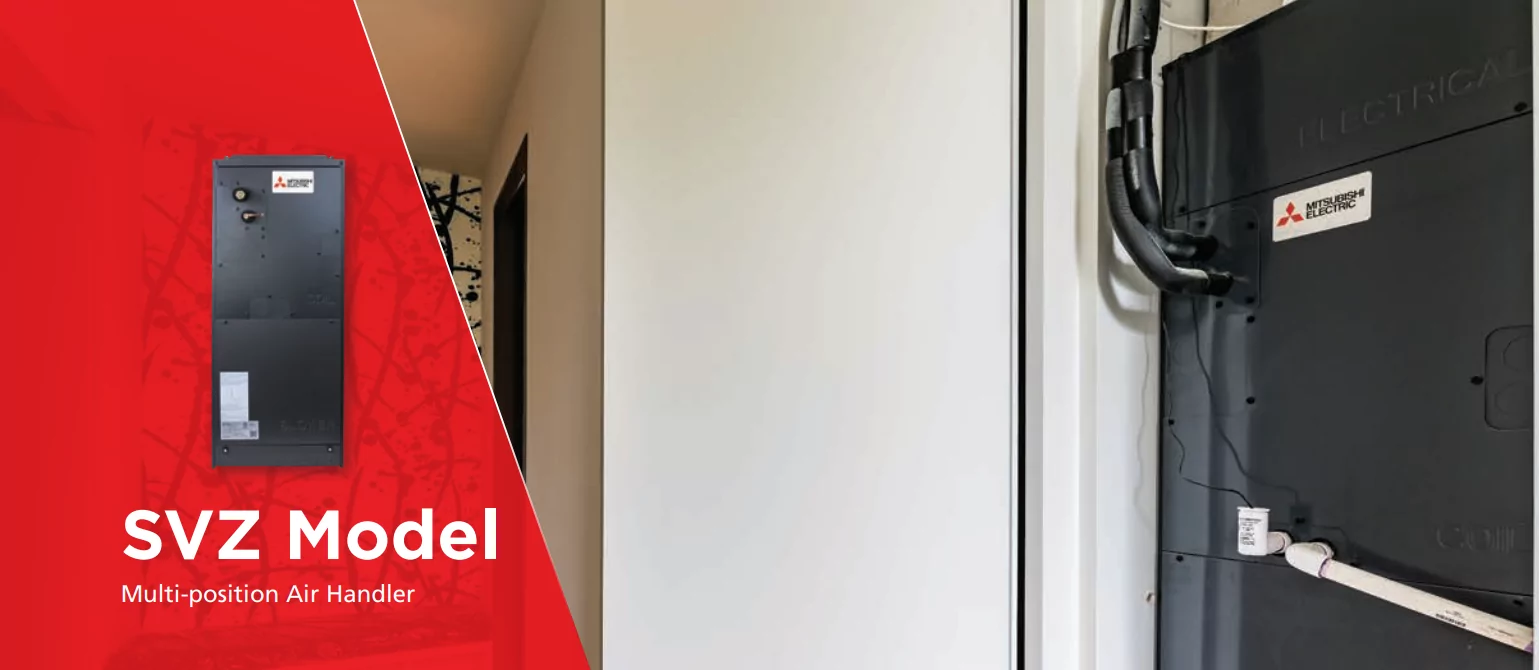
In this article, I wanted to address a few things about switching from a gas heater with electric air conditioning to all-electric heating and cooling with a Mitsubishi Ducted Heat Pump.
Why the switch? Many players in California are “all in” when it comes to the green energy movement and have set a goal for themselves to be carbon neutral by a specific 2030 or 2040.
So, things are already in the works to make this happen smoothly. One of the routes is for home HVAC systems to switch from gas fuel to electric fueled systems.
As homes start being built from here on, neighborhoods that don’t already have natural gas pipes running to those locations will be required to use electricity only. That building code has already gone into effect.
If you live in a home that currently uses natural gas or liquid propane, you aren’t required to make the switch. When your HVAC system is ready to be replaced, you can go right back to a gas/electric system. So, I wanted to make that clear.
I Heard Heat Pumps Don’t Heat Like Gas Furnaces
Now, when we give folks the option of switching to the ducted mini-splits, we usually hear something like, “I heard heat pumps won’t heat as well as my gas furnace.” My answer is that if you set your house to 72 degrees, it’ll be 72 degrees in your house. If you drop it down to 68, it’ll go down to 68, just like a gas furnace.
The air temperature coming out of a Mitsubishi ducted air handler is about 100 degrees. The heat coming out of a gas furnace is around 130. Sometimes higher. So, yes, the heat coming out of a variable speed Mitsubishi ducted heat pump is typically less than the heat coming out of a gas furnace. But unless you’re trying to schedule big temperature swings in your house, like letting it get down to 65 degrees at night and then wanting it to be 74 first thing in the morning, it’s a non-issue.
Is it a race to see how fast the home will go from 68 degrees to 74? If it is, then yes, the gas furnace will take less time to get there every time. Here’s a typical schedule we see on modern thermostats that allow the homeowner to request a specific temperature when you wake up, go to work, come home from work, and go to bed.
Wake up: 68 degrees
Leave for work: Let it drop down to 65 degrees in the house
(which it usually won’t in the daytime anyway)
Return from work: 68 degrees
Sleep: Let it drop down to 65
(because you’re under the covers anyways)
Those are typical settings. And again, the temperature is going to stay on whatever setting you set it for. So, there’s never cool air coming into the house. It’s going to be warm and cozy just the way you like it.
Another point to make with single-stage gas furnaces is that the temperatures swing a couple of degrees more or less. In contrast, the variable-speed Mitsubishi ducted air handler is going to provide a more consistent temperature in your home. It can do that because variable speed systems ramp up and down like a speedometer on your car, providing a steady temperature all day long.
Why Does Heat-Pump Air Feel Cooler Than Furnace Air?
If you’re switching from a gas furnace to a Mitsubishi ducted heat pump, you may notice that the air coming from your vents feels less hot. That difference is generally normal.
A gas furnace burns fuel to produce heat and typically delivers hotter supply air. A heat pump transfers heat from outdoors into your home, often delivering a gentler stream of warm air over a longer period. The vent temperature varies with the equipment, outdoor conditions, airflow, and current heating demand.
Air can feel cool against your skin while still being warmer than the room and adding heat to your home. The better check is whether your indoor temperature reaches and maintains the thermostat setting not whether the vent feels as hot as it did with your furnace.
When Should You Have It Checked?
Less-hot air is different from a system that isn’t heating properly. If your home keeps getting colder, the system cannot maintain its setting, or the airflow suddenly changes, schedule an inspection. Your technician can check thermostat settings, airflow, duct leakage, and equipment operation.
Why Does a Heat Pump Run Longer?
Longer heating cycles are often expected, especially with a variable-speed Mitsubishi ducted heat pump. Instead of repeatedly delivering a strong burst of heat and shutting off, the system can adjust its output to match your home’s heating needs.
Once the room approaches the thermostat setting, the equipment may continue operating at a lower output to maintain a more consistent temperature. You may hear it running more often even though it isn’t working at full capacity.
Colder outdoor weather and recovery from a large thermostat setback can also extend heating cycles. Keeping a relatively steady setting can reduce the need for a large morning warm-up.
Does Longer Runtime Mean Higher Bills?
Runtime alone doesn’t tell you how much electricity the system uses. A variable-speed heat pump operating at reduced output can draw less power than it does at full output. Your costs also depend on weather, utility rates, insulation, duct condition, and any electric backup heat.
Long cycles can be normal when your home stays comfortable. If extended operation comes with falling room temperatures, new noises, or an unexplained increase in energy use, have the system evaluated.
Defrost Cycle – Why the Outdoor Unit Develops Water
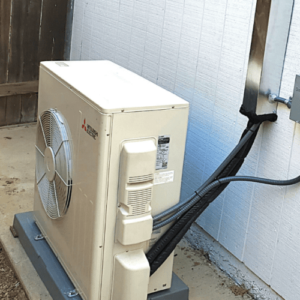
Here’s a question we get from newly christened heat pump owners: “Why is there water accumulating around my outdoor unit?”
In cooling mode, you have the outdoor unit, which is the hot coil. Inside, you have a cold coil at the air handler, where the blower then sends air across to get your cold air. That cold develops condensation on it, which drains into a PVC pipe that terminates on the side of the house.
In the heating mode, everything just reverses. Literally, the refrigerant inside the tubing leading from outside to inside switches direction. So, you end up with the cold coil outside and the hot coil on the inside, where the blower sends air across to get your warm air. That cold coil outside will condense water, which on the coldest days will create frost. Once the outdoor unit has frosted to a certain point, it will defrost. That melted frost becomes clean water, which will drain down to the ground surrounding the outdoor unit. It’s not a lot, but enough to make a new heat pump owner think something is wrong.
That’s totally normal for any heat pump to go through this process. Learn more about defrosting heat pumps by clicking here.
I’ve Heard the Heat Strips Will Increase My Electric Bill
Standard unitary ducted heat pumps, like Goodman, Ruud, Lennox, Carrier, etc., use heat strips to supplement the heat given on the coolest days of the year. Typically, under 38 degrees outdoors. Those heat strips can double the cost of running your heat pump. I’m not going to lie.
What is different about Mitsubishi’s systems is that they are super-efficient even under 30 degrees. Mitsubishi’s units can extract more heat from the outdoor air and bring it inside to you without using its heat strips.
Here’s another thing. We don’t usually install the heat strips for our Sacramento area customers, where 30 degrees is about as cold as it gets for a couple of weeks during the nights. Our previous customers have continued staying warm without them because the system is that efficient.
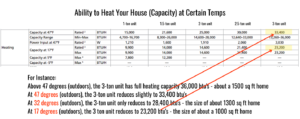
If we lived in a colder climate like Auburn or Placerville, it would be smart to add those heat strips since the temperatures dip a little lower than 30 at those elevations. In that case, running the system in the wintertime below about 35 to 40 degrees outdoor temperatures will signal the heat strips to come on. That is when the cost to run the heater will rise, because they draw a large amount of electricity to supplement the variable speed heating system. So consider this information when deciding if you want to go with these ducted air handlers.
I do want to make a clarification for you on other air handlers besides the ducted system. I’m talking about the wall mounts, ceiling mounts, and floor mounts. These never have any heating issues in low temps. At least here in the Sacramento Valley. Other parts of the country where it gets below 15 degrees, will want to upgrade to Mitsubishi’s Hyper-Heat outdoor units. They guarantee heat down to -5 degrees!
Do You Need an Electrical Panel Upgrade for a Heat Pump?
Not every gas furnace replacement requires an electrical panel upgrade. Whether your home can support a Mitsubishi ducted heat pump depends on the selected equipment, your existing electrical service, and the other appliances drawing power.
A licensed electrician should evaluate your panel and complete an electrical load calculation before installation. Empty breaker spaces alone don’t confirm that your home has enough capacity. Likewise, a full panel doesn’t automatically mean you need a larger electrical service.
What Determines Whether an Upgrade Is Needed?
Your HVAC contractor and electrician should review:
- Equipment requirements: The exact indoor and outdoor models determine circuit, wiring, and breaker requirements.
- Backup heat: Electric resistance heat strips can substantially increase the electrical demand. Confirm whether they are included in your proposed system.
- Existing electrical loads: EV charging, electric cooking, water heating, and other major appliances affect available capacity.
- Panel condition and space: The panel must be suitable for the installation and accommodate the required circuits.
- Future upgrades: Mention plans for additional electric appliances so the assessment considers your longer-term needs.
Can You Keep Your Existing Panel?
In some homes, the work may be limited to adding or modifying circuits. Existing air-conditioning wiring may be reusable if it meets the new equipment’s specifications. Where appropriate, an electrician may recommend a subpanel or approved load-management equipment. A subpanel adds circuit space; it does not increase your home’s electrical service capacity.
Ask for a written estimate that separates HVAC installation from electrical work and identifies any panel replacement, service upgrade, permits, or utility coordination. Reviewing these details before installation helps you understand the full cost of switching to a heat pump.
Why are the SEER ratings a little lower on the larger units?
For one reason or another, the organization that rates the SEER on air conditioners and heat pumps rates the 3- and 4-ton ducted heat pumps a little lower than the smaller tonnage units.
Ducted heat pumps’ efficiency numbers tend to go down for units higher than 2.5 tons. I always tell people not to get so caught up in the SEER ratings on systems and focus on the system’s technology. Any variable speed system will utilize less power because it can operate at specific levels, usually lower levels. Standard systems have either one or two stages (or levels) that they run at. Not hundreds of variable speeds like the more efficient Mitsubishi units have.
Also, if you have to get caught up in numbers, you’d want to look at the HSPF ratings more than the SEER rating when it comes to the heating season. Standard unitary systems have HSPFs around 9 or 10. Whereas the Mitsubishi variable-speed ducted heat pump has HSPF numbers around 11 at the lowest and 13.5 on the high end. A big difference from 9 HSPF.
These were questions that we get from new Mitsubishi ducted mini-split owners. They aren’t used to variable-speed heat pumps, so when they see a little water develop on the ground around the outdoor unit, they tend to call us and ask what is causing it. For ongoing support and seasonal maintenance of your system, consider joining our HVAC Maintenance Club for priority service and exclusive member benefits.