What Is a Thermostat C-Wire and Do You Need One
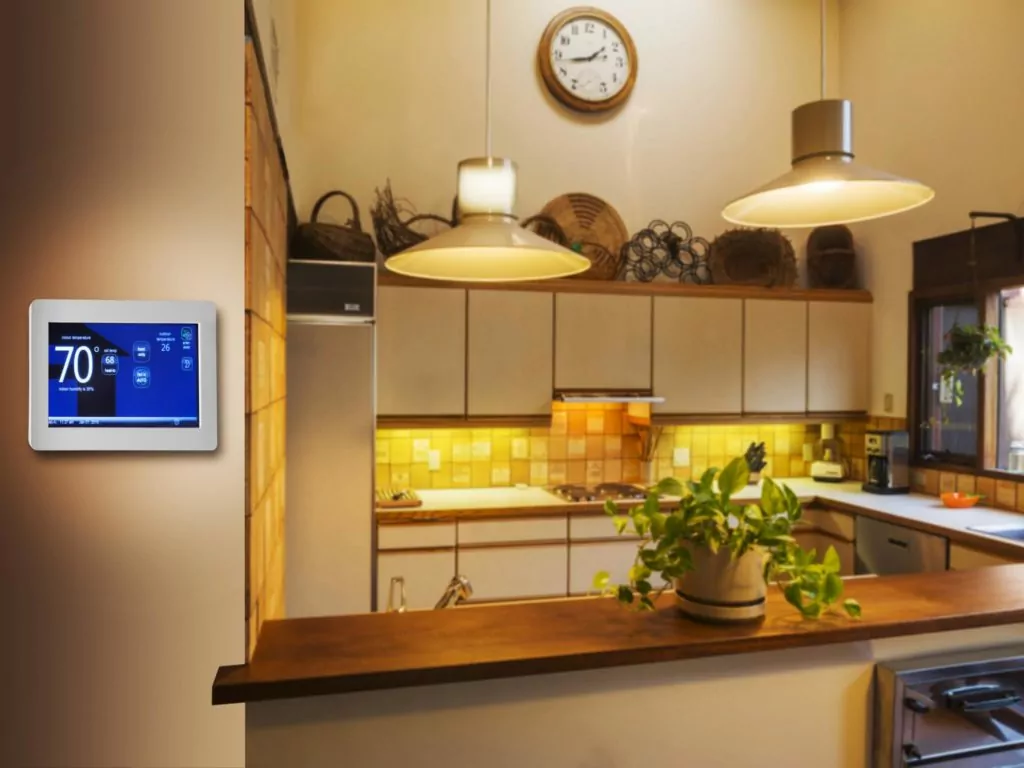
If you’re upgrading from a traditional thermostat to a smart thermostat, you may have heard that you need a common wire (C-wire). While a thermostat’s C-wire provides continuous power, whether you are required to have one will depend on your thermostat model and heating, ventilation, and air conditioning (HVAC) system. When you get a new thermostat installed, Fox Family Heating & Air Conditioning will walk you through the requirements for your model and what to expect.
What Is a C-Wire on a Thermostat?
So, what is a C-wire? And does my thermostat need a C-wire?
The “C” in C-wire stands for common. This wire is responsible for completing the power circuit in 24-volt HVAC systems.
In this type of thermostat setup, the R wire brings power to the thermostat. The C-wire is the return path.
Older mechanical thermostats often functioned as simple switches, turning heating and cooling equipment on and off without requiring a dedicated power source. Smart thermostats have Wi-Fi connections, sensors, displays, and schedule-learning algorithms that require a constant source of power. If your thermostat requires a C-wire and the wire is disconnected, the thermostat may fail to turn on or operate properly.
Does Your Thermostat Need a C-Wire?
You may need a C-wire, but it is possible to install a smart thermostat without a C-wire. It depends on the model you decide to install.
Basic Battery-Powered Thermostats
Traditional mechanical thermostats generally do not require a C-wire or batteries for basic operation. Battery-powered digital thermostats can also operate without a C-wire and may offer features such as programmable schedules and electronic displays.
Smart Thermostats That Use C-Wires
Some smart thermostats are designed so that they must have a C-wire installed. This type of setup means the smart thermostat can continuously stay connected to Wi-Fi and keep its display lit. Ongoing power also means the thermostat can learn your scheduling preferences. Internal batteries can stay powered up through the C-wire without relying on power harvesting from HVAC equipment.
Smart Thermostats That Don’t Use C-Wires
Certain thermostats, such as some of Google’s Nest models, do not need C-wires. Instead, they use something known as power stealing or power harvesting. These thermostats draw small amounts of electricity through the HVAC control circuits to power their internal components, even when the heating or cooling equipment is not actively running.
There are also other models that use an external power adapter or converter kit. A compatible C-wire adapter can provide a smart thermostat with the power it needs without requiring you to run an additional wire through your walls.
To make sure you get the right setup for your needs, you should carefully read through the model’s installation instructions and compatibility requirements before buying. When in doubt, you can reach out to our team for a professional evaluation and support.
How to Check Whether You Have a C-Wire
As a Sacramento homeowner, there are a few steps you can take to see if you have a thermostat C-wire.
- First, turn off your HVAC power.
- Once the power is off, you can remove the thermostat’s cover.
- Then, you should search for a wire that is connected to the thermostat terminal labeled with a “C.” You cannot simply rely on color alone because C-wires do not have a standardized color. C-wires are often blue, but they can also be brown or black.
If there is an unused wire behind your thermostat, you may be able to use it for a C-wire. However, its connection to the equipment must be verified by an experienced HVAC technician before it is repurposed.
What Are Your Options If You Don’t Have a C-Wire?
Even if you do not currently have a C-wire installed, there are alternative ways that you can set up your home with a smart thermostat.
Connect an Existing Spare Wire
Sometimes, there is an unused conductor behind the thermostat. This can be used for the C-wire if it is compatible.
Use a Compatible C-Wire Adapter
Manufacturer-approved adapters and power connectors can provide compatible smart thermostats with power using existing wiring, eliminating the need to run an additional wire. For example, Google’s Nest Power Connector can be used with compatible thermostats. Because thermostats, HVAC equipment, and existing wiring can all vary, it’s important to have your adapter options reviewed for compatibility before trying to install them.
Install New Thermostat Wiring
An alternative option is to run new thermostat wiring from your HVAC control board to the thermostat. This solution may be the best option if there is easy access through a crawl space, attic, or unfinished wall. If the existing wiring is frayed or damaged, installing new wiring is also the safest option.
Choose a Thermostat With Different Power Requirements
You can avoid installing a new C-wire if you switch to a compatible battery-powered thermostat or another model specifically designed to operate without a C-wire. However, it’s always a good idea to check your existing wiring and system to verify that they support your new thermostat before you buy and install it.
Can Power Problems Affect Your Smart Thermostat?
Absolutely. While thermostat malfunctions can be due to many different issues, power-related malfunctions are one potential cause. If there is a power problem involved, your thermostat may experience Wi-Fi disconnections, repeated battery drain, or power-related error messages.
Experiencing these symptoms does not mean that your C-wire is missing. Instead, you should schedule a professional assessment to diagnose the issue.
It’s also important to note that “Wait” and flashing “Cool On” messages do not mean that your thermostat has lost power. If you see either of these messages, it likely indicates a normal compressor protection delay.
When to Call an HVAC Professional
To ensure your thermostat works properly and your electrical connections are safe, it’s a good idea to get help when setting up your new thermostat. In the following situations, you should always reach out for professional support.
- The wiring labels are unclear.
- Your equipment connections need to be checked.
- You are uncertain whether the adapter is compatible with your thermostat, wiring, and HVAC equipment.
- You are unsure whether your new thermostat is compatible with a line-voltage or proprietary HVAC control system.
- Your home is switching from a manual thermostat to a smart thermostat, and you don’t know if you have a C-wire.
Frequently Asked Questions
What color is a thermostat C-wire?
When it comes to a thermostat’s C-wire, the color can vary. While the most common C-wire color is blue, there is no universal color that is used with every thermostat model. The wire may also be brown or black, so you should have an HVAC technician evaluate your thermostat setup if you have wiring questions.
Is the C-wire the same as a ground wire?
No, they are not the same thing. A ground wire provides a safe path for electrical fault current, helping protective devices such as circuit breakers shut off power and reduce the risk of electric shock and fire. Meanwhile, a C-wire is designed to provide a continuous, low-voltage circuit from the transformer. This gives the thermostat an ongoing power source and a way to remain connected to Wi-Fi.
Can a smart thermostat work without a C-wire?
Yes, it is possible to set up a smart thermostat that doesn’t use a C-wire. Depending on the model, the thermostat may use a battery, energy harvesting, or a C-wire adapter so that it doesn’t need a C-wire. Although a C-wire may not be required, some source of continuous power is necessary for the smart thermostat to function properly.
Does a battery-powered thermostat need a C-wire?
A battery-powered thermostat does not require a C-wire. Instead, its source of continuous power comes from its batteries. Battery-powered thermostats require periodic battery replacement. Smart thermostats that rely on batteries or alternative power methods may also experience connectivity or performance problems if their power supply is insufficient. Because each setup has benefits and drawbacks, it’s a good idea to review all your thermostat options with a professional HVAC technician before you have anything installed in your home.