Why Did Some Power Circuits Stop Working? First Things to Check
When your entire home loses power during a storm, it’s easy to guess why the electricity is out. The hard part is understanding what’s going on when a single section of your home experiences an outage. If your heating, ventilation, and air conditioning (HVAC) equipment won’t work because of a partial outage, our team of experienced technicians can help you determine where the problem is occurring and the best course of action.
What Does It Mean When Only One Part of Your Home Loses Power?
A partial outage generally means there is a circuit-level issue involved. If a single room, your HVAC equipment, or a group of outlets lose power suddenly, the circuit breaker has tripped, or the circuit is malfunctioning.
As a homeowner, the most important thing is to approach this problem as safely as possible. While there are some safe checks you can make on your own, major electrical problems and repairs should always be left to the professionals.
Before You Troubleshoot: How To Stay Safe
To help you address this inconvenience, we’ll cover some of the most basic checks. However, you should immediately stop performing checks if you notice any heat, burning odors, or sparks. Additionally, repeated breaker tripping is another indication that you should stop troubleshooting and call a licensed electrician.
Signs You Need To Stop Immediately
The following signs are indications that you should immediately stop and get help.
- Scorched outlets
- Burning smells
- Buzzing sounds
- Water exposure in and around the outlet
- Warm faceplates
- Repeatedly tripped breakers
Why Repeated Trips Matter
Breakers are an important safety feature. When a circuit overloads, short circuits, or experiences a ground fault, the breaker trips to stop electricity from flowing. By doing so, it prevents fires and overheating.
A single occurrence isn’t a cause for alarm. If the same breaker trips repeatedly, it means that there is an underlying electrical problem that isn’t going to go away on its own. Most likely, your home has damaged wiring, an overloaded circuit, equipment malfunctions, or a short.
First Things To Check When a Power Circuit Stops Working
As soon as a circuit loses power, there are a few quick, simple checks you can perform to figure out the underlying problem.
Check the Breaker Panel First
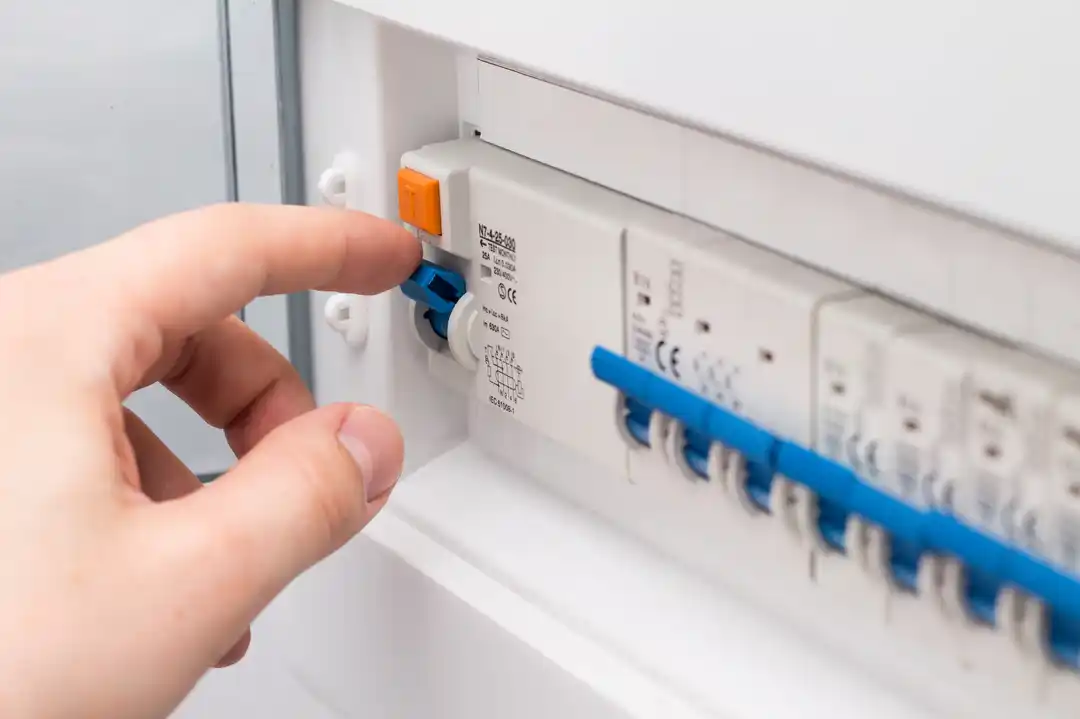
The first step is to check your breaker panel. When a breaker trips, it doesn’t always move into the off position. Instead, it often just sits in the middle, although this can vary between different breaker designs.
If you see a breaker in this middle position, turn it all the way off before switching it on again. In most cases, this should resolve the problem completely.
However, you should not keep resetting the breaker if it continues to trip. In this circumstance, you should call a professional electrician for help.
Look for a Tripped GFCI Outlet
A GFCI outlet could also be causing your lack of power. GFCI outlets are designed to protect circuits that are in humid or wet areas, such as kitchens, bathrooms, laundry rooms, and garages. If they detect a ground fault due to moisture, they trip and shut down the rest of the circuit.
Try resetting it by pressing the reset button. If the power does not start working right away, there is something else wrong.
Unplug Recent Appliances and Think About Overloads
One of the most common reasons why circuit breakers trip is having too many appliances. Kitchens are notoriously bad for this problem. If you have a microwave going while you start a pot of coffee and toast bread, it can overload the circuit. Space heaters, microwaves, vacuums, window ACs, and hair styling tools are some of the most common culprits responsible for overloaded circuits.
The good news is that this is a relatively easy problem to fix. You simply need to unplug one or more of the appliances and use them on a different circuit. At the very least, you’ll need to make sure that you use appliances one at a time if they remain on the same circuit.
Figure Out Whether the Problem Is One Outlet, One Wall, or One Room
Before you call for help, it’s a good idea to figure out the extent of the problem. Try using appliances in different rooms and on different circuits. This will help you determine if you’re dealing with a dead receptacle, switch issues, a circuit problem, or something that affects your entire house.
Other Reasons Outlets or Circuits May Stop Working
As a homeowner, there are a few underlying causes of outlet- and circuit-related problems that you should watch out for.
Loose Wiring or a Worn Outlet
Loose wiring or a worn outlet may cause the outlet to stop working. If the outlet and wiring are starting to wear out, you’ll often notice crackling noises, burned odors, and discoloration. When you plug something in, it may feel like the plug fits loosely.
This type of problem is easily fixed by having an electrician install a new outlet. Because outlets are relatively cheap to replace, it’s generally better to replace them rather than repair them.
AFCI Protection or a Hidden Downstream Problem
Electricians have many tools available that can help them check for less common problems. With a multimeter, they can look at voltage and resistance to figure out which outlets and circuits are having issues.
AFCI protection could also be responsible for your outage. This protective feature stops the outlet or circuit from working whenever a dangerous electrical arc is detected. While this is an important safety feature, it can sometimes be a nuisance when it occurs due to false alarms. For example, vacuums, treadmills, and other complex electronics can make electrical noise that accidentally trips the AFCI breaker.
What To Do if a Circuit Supplying Your Furnace, Thermostat, or Air Conditioner Loses Power
At Fox Family Heating and Air Conditioning, we can help with all of your HVAC-related questions. If you have a dead circuit and your comfort system won’t work, we can recommend the best steps to take. As a homeowner, there are a few troubleshooting tips you can use before you need to call in the experts.
Simple HVAC-Related Checks
First, check your thermostat display to make sure your unit is in the right mode and set to the correct temperature. If your thermostat has power and is set appropriately, you can check your air filter to see if a clogged filter has caused an automatic shutdown. You should also see if a clogged condensate drain or condensate pump failure has caused a safety shutdown.
Throughout the process, you should pay attention to what equipment was affected. If only the HVAC equipment isn’t working, it may be due to a problem with the actual equipment. When a whole area or circuit has lost power, the problem is likely electrical.
When the Issue May Be Equipment-Related
Breaker trips aren’t always caused by the breaker itself. If your HVAC equipment has a failing motor, pump, or other component, it can trigger the breaker to shut off. While you can try resetting the breaker once, you should not repeatedly reset it because recurring trips mean there’s an underlying malfunction going on.
When To Call a Licensed Electrician
Once you’ve finished the safe DIY checks, stop. Electrical systems and HVAC units can be dangerous to work on if you aren’t licensed to handle them. As soon as you notice any of the following warning signs or major issues, you should reach out for professional help.
Urgent Warning Signs
The following signs mean you need to call an electrician or HVAC technician for support.
- Hot panels
- Visible signs of damage
- The breaker won’t turn on again
- Smell of smoke
- Multiple dead circuits present
Non-Emergency Reasons To Book Electrical Services
While the following situations aren’t immediate emergencies, you should still get the problem checked out by a professional as soon as possible.
- One dead circuit keeps failing.
- An outlet is loose.
- After basic checks, the outlet remains dead.
FAQs
Why would outlets stop working if the breaker is not tripped?
GFCIs can shut down the circuit without tripping the breaker. Additionally, loose wiring and worn outlets can fail without necessarily affecting the breaker.
Can one GFCI outlet shut off multiple outlets?
Yes, it can. GFCI outlets can shut off any outlets downstream. Think of GFCI like a traffic cop. When the traffic cop stops traffic at the start of the roadway, those cars can’t appear at later intersections until the officer lets them through. Similarly, a GFCI outlet can block energy from passing through to downstream outlets.
Is it safe to keep resetting a breaker?
No, it isn’t. If your breaker continues to trip, you’ll need to schedule a professional inspection.
Should I call an electrician or an HVAC company if my furnace has no power?
If your furnace is without power, it depends on what the issue is. A dead circuit or a repeatedly tripped breaker should generally be dealt with by an electrician. In comparison, an HVAC technician is the best solution if the cause stems from your actual furnace.
Schedule Your Professional Inspection
At Fox Family Heating and Air Conditioning, we have seen all types of HVAC problems over the years. If your HVAC equipment won’t turn on, our team is here to help.
Ready to diagnose your HVAC problems? Reach out to Fox Family Heating and Air Conditioning today.